Sunday, February 14, 2021

Portion Terumah: Generosity/Nedivut


Make for me a sacred place, so that I may dwell within you.     (Exodus 25:8)

Research in the field of positive psychology over the last two decades that it truly is better to give than to receive.  In a study published in the journal Science, psychologist Elisabeth Dunn gave envelopes containing money to her students at the University of British Columbia and told them that by day’s end, they had to either spend the money on something they wanted or purchase a gift for someone else.  When Dunn interviewed the students later, the results were clear: those who gifted others were significantly happier than those who kept the money for themselves.

In this week’s Torah portion, Terumah, God asks the Israelites to donate materials for the construction of the mishkan, the portable sanctuary that they will carry through the desert for the next forty years.  God tells Moses: “Accept gifts for Me from every person whose heart so moves them.”  The people respond with extraordinary generosity, bringing forth beautiful fabrics, tanned skins, fine wood, oil for lighting, precious stones and, above all, gold, which will be used to cast the sacred vessels.

Why does God request such offerings?  Lest one think that the Holy One needs a luxurious dwelling place, the Rabbis point to the wording of Exodus 25:8: “Let them make for me a sacred place, so that I may dwell among them.”  God does not ask for a sanctuary in order to dwell in it; instead, God suggests that through the building process—which invokes the people’s generosity—God will dwell among them.

In other words, God asks for our gifts because God knows that the very act of giving opens the heart of the giver and thus creates the possibility of intimacy.  When we share what we have with others, we raise ourselves in holiness, for the name of the portion, Terumah—meaning “a donation”—comes from a Hebrew root for “to lift up.”  Through giving, we draw upon our own higher angels and invite the Divine into our lives.

In other words, it really is better—healthier and holier—to give than to receive.

**********

The character trait of generosity is known in Hebrew as nedivut, which refers to an openness of heart that moves us to share what we have with others.  The cultivation of this quality is an essential Mussar practice.  The founder of the movement, Rabbi Israel Salanter taught that “the spiritual is higher than the physical, but the physical needs of another are an obligation of my spiritual life.”  We heal our own souls by bearing the burden of others and sharing what we have with those who are in need.  As Alan Morinis notes in Every Day, Holy Day:

The heart gives freely when it realizes that it is not a separate and isolated entity, but rather belongs to larger wholes.  Giving comes easily to such a heart because it experiences no rupture between the one who gives and the one who receives.  Generosity by its nature draws closer the giver and the receiver, until ultimately there is neither “me” nor “you,” but only love.

**********

Mussar Practice for this Week (from Every Day, Holy Day)

Begin each morning with the phrase: The generous heart gives freely

Then try to do three generous acts per day: one with your money, one with your time, one with your caring.


Sunday, February 7, 2021

Portion Mishpatim: Order/Seder


These are the rules that you shall set before them.  
                (Exodus 21:1)

Jewish wisdom does not follow a partisan political platform.  While my personal politics incline (mostly) toward progressivism, I recognize that our tradition offers its share of teachings and opinions that echo the ideology of classic conservatism. Judaism is too old and vast to follow any single party line; look closely and within our sacred texts you can find a vast array of views that include radicalism, moderation, socialism, capitalism, and almost everything in between.  

There is, however, one perspective that is noteworthy in its absence: anarchy. This attitude, which asserts that the best government is, essentially, no government at all, is often where the far left and far right meet. We don’t see it in our Jewish tradition because it is anathema to the very foundation of our culture.  Jewish life is built upon the rule of law—a system of mitzvot, of legal and ethical obligations. Long before Thomas Hobbes described life without government as “solitary, poor, nasty, brutish, and short,” our Sages taught: “Pray for the welfare of the government—for without proper respect for governmental authority, people would swallow one another alive.”  It is worth noting that the government under which the Rabbis lived was hardly benign. They endured brutally oppressive Roman rule—yet they still saw this as a better alternative than anarchy.  Our Sages would have been deeply shaken—as we all should be—by the anarchic (and not coincidentally anti-Semitic) takeover of the US Capitol just a few weeks ago.

For Jews, law makes life possible, and, at its best, it raises us up as individuals and communities.  At every level—from families to neighborhoods to synagogues to nations—just laws create and maintain just societies.  In our culture, we insist that belief follows behavior.  To change your beliefs and suppositions, you start by changing what you do in the world.  And the best way to change behavior is to change the law.  To offer an example dear to my heart: If we want to create justice for our state’s LGBTQ community, you don’t say: “We’ll add the words after we teach everyone to love one another.”  Instead, we slowly, imperfectly—but inexorably—teach love by making it the law, even for those who don’t (yet) love.

This week’s Torah portion, Mishpatim, is at heart a collection of laws dealing with an eclectic assortment of topics, civil and criminal and ritual, holy and mundane.  At first, it seems a far cry from the spiritual heights of last week’s parshah, where God speaks to the Israelites from Mount Sinai.  But since, for the Jewish people, law is love and life, these legal matters are of utmost spiritual significance.  

**********

In the Mussar tradition, the opposite of anarchy and chaos is the midah of seder, meaning spiritual order.  The significance of this character trait can be gleaned from the Hebrew word, which lends its name to both the order of the Passover meal and the siddur, the prayer book that contains the “order” of our daily and holiday liturgy.  As Alan Morinis notes in Everyday Holiness, Mussar is a practical discipline that draws upon this trait, and sees it as essential to both functional daily life and divine service.  Chaos is an impediment to a meaningful, intentional life; order helps make this path possible.  Morinis concludes: “Order helps create an inner sense that the things that matter have been properly arranged and tended to and, as a result, that the details of life are under control. Calm and unworried, at that point the channels to the divine will are open and unencumbered as they can get, and the possibility of serving—and happiness---will have become real for you."

**********

Mussar Practice for this Week (from Every Day, Holy Day)
Begin each morning with the phrase: First things first and last things later
Then try to set one thing in order every day this week.

Sunday, January 24, 2021

Portion Beshallach: Honor/Kavod


Then Moses and the Israelites sang this song to the Holy One—They said: “I will sing to the Holy One, who has triumphed gloriously! God has hurled horse and driver into the sea!”
(Exodus 15:1)

At the time (of the destruction of the Egyptian at the Sea of Reeds) the ministering angels desired to recite a song before God.  But the Holy One said to them: My creatures are drowning in the sea, and you are reciting a song before Me? Apparently, God is not gladdened by the downfall of the wicked. Rabbi Yossi bar Chanina says: God does not rejoice in their downfall, but God does allow others to express joy.                                    (Talmud, Sanhedrin 39b)
                                                                                                                                                                                                                                                                                                           
**********

How do we respond to the demise of our enemies?  

This week’s Torah portion, Beshallach, raises this ever-relevant question and refrains from offering simplistic answers.

Many of us know the midrash where God rebukes the angels for singing as the Egyptians drown in the Red Sea; it is featured in many of our Pesach seders, cited as we take ten drops of wine from our cup to remember each of the plagues, a reminder that our joy at liberation should be diminished by the suffering of others.  But this is only half of the story—for while God does silence the angels, God does not object to the Israelites’ victory song, which revels in the death of our oppressors.  Indeed, God seems to take pleasure as we chant triumphantly, “They went down into the depths like a stone!”  Liberal Jews tend to focus on the angels’ silence much more than our ancestors’ song.  The idea of rejoicing in the death of our enemies embarrasses us, because it feels primitive and violent.  Yet I believe it is wrong to completely ignore or deny the joy we feel when our adversaries fall.  

**********

In the Musssar Torah Commentary, Rabbi Nancy Wechlser ponders the events at the Red Sea as a reflection upon the midah of honor, which is known in Hebrew as kavod.  She writes: “It seems that our tradition is of two minds when it comes to kavod.  On the one hand, we are commanded to celebrate our redemption from our enemies, which we might call “kavod to self.”  At the same time, we are commanded to feel empathy for other human beings—including our enemies—and lift them up with kavod, too, that is “honoring others.”  We live with this dichotomy.  If we are not happy that evil has been punished, then we do not care enough; but if we are not sad at the loss of life, then our humanity is weakened.”  To rejoice is to honor our own commitments and high ideals.  To temper our rejoicing is to honor every human being as intrinsically due a sense of dignity.

**********

In the chapters on honor in his book Every Day, Holy Day, Alan Morinis offers the key phrase/affirmation: Each one, holy soul.  It would be nice if the phrase read, Each good one, holy soul.  But as Morinis notes, every human being is created in the image of God and therefore worthy of some measure of honor—including our adversaries.  Indeed, this is the real challenge with kavod.  It’s relatively easy to honor people that we love and respect; the true test lies in learning to honor those whose actions cause us grief.  We should fight hard for our own highest ideals, and we are not required to our enemies—for we are not angels—but we should strive to remember that they, too, are children of the Holy One, and honor them accordingly.

Mussar Practice for this Week  (from The Mussar Torah Commentary)
Give kavod/honor to someone without expectation to receive in return.  Give honor to a person with whom you do not have an easy relationship.  Notice what happens.

Sunday, January 10, 2021

Portion Vaera: Faith/Emunah


During my rabbinical school years, I attended a fascinating debate between two faculty members—one a devout believer, the other a staunch atheist.  They disagreed about almost everything, and as the conversation wore on, each of them grew frustrated.  Finally, the atheist exclaimed: “You keep asking me why I don’t believe, based on the Torah!  Well, if I had seen firsthand the miracles described there—the plagues, the parting of the Red Sea, the thunderous voice upon Mt Sinai—then I, too, would have faith in your God.”  To which the believer responded: “No—if you had been there, you’d have turned to me and asked, ‘What’s this ruckus all about?’”

In this week’s Torah portion, we see the truth of this argument: miracles never make believers out of skeptics.  Pharaoh repeatedly fails to take to heart the lesson of the plagues; for him, seeing is not necessarily believing.  Alas, as the story of our liberation unfolds, it becomes painfully clear that the Israelites are equally unconvinced by God’s marvels.  Miracles do not move us any more than they do Pharaoh.  Much as his heart is hardened, our spirits are crushed.  Thus, when Moses first performs portents and proposes to bring us out of Egypt, we refuse to listen.  Immediately after our miraculous passage through the Red Sea, we complain about the bitter water.  Our response to the revelation at Mt Sinai is to ask Aaron to make us a golden calf.  Indeed, in the entire Hebrew Bible, there is not a single case of a miracle inspiring sustained faith in God for anyone.  My teacher, Rabbi Herbert Brichto, z”l, argued that this is, in fact, the core lesson of miracles: Torah comes to teach that they are no grounds for spiritual living.  We don’t believe on account of what we see; we see on the basis of what we believe.

So if miracles inevitably fall flat, what does constitute a firm foundation for a faithful life?  David Foster Wallace tells the story of two young fish who are swimming along when they meet an older fish coming from the opposite direction.  “Morning, boys,” he says, “How’s the water?”  The two young fish continue along silently until eventually one of them looks at the other and asks, “What is water?”

Wallace’s point is simple: the only way to open our hearts—and therefore also our eyes—is to live mindfully.  What blinds the young fish—and Pharaoh and our own biblical ancestors and, of course, ourselves—is our tendency to operate wholly unconsciously, to take things for granted rather than making our choices consciously.  Our challenge is, as Wallace notes, to keep reminding ourselves over and over: “This is water.”  It all begins with mindfulness.  Full consciousness is the real miracle.  

**********

The Hebrew noun for faith—emunah—refers to a kind of trust and reliability.  It is less a matter of belief and more a case of mindful conviction.  When we commit to true attentiveness, we see that there is always more than meets the eye, whether or not we choose to call it God.  As Alan Morinis notes, “in Mussar, faith is not so much something held as pursued.  How could it be otherwise when relating to divinity that is not only hidden, but that has hidden that very hiddenness?”

Mussar Practice for this Week 

This week, begin and end each day with the words of the Shema:

Sh’ma Yisrael Adonai eloheynu Adonai echad

Pay attention, children of Israel, the Holy One is our God, the Holy One is One.

As you speak or sing the words, be mindful of your breath—and of the beauty in the people and world around you.  For a moment, at least, trust in the God/the Universe.


Friday, January 8, 2021

This Is America (Portion Shemot 5781)


In a dark and troubled time, how and when does the healing start?

When hatred and violence constrict our world so tightly that it’s hard to breath, what marks the beginning of our liberation?

At the end of this tumultuous week, these questions stand at the heart of both our national discourse and our Torah portion, Shemot, which opens the book of Exodus, with its epic narrative of bondage and redemption.

First, then, the here and now, in the aftermath of an unprecedented insurrection fomented by a sociopathic president raging through the bitter end of his tenure.  On Wednesday evening, President-Elect Biden gave a brief speech designed to reassure our shell-shocked nation.  As I listened, I felt grateful for his calm, collected demeanor and magnanimous words.  But uneasiness set in when he insisted, “This is not America.  This is not who we are.”

I have heard variations of this statement for decades, including here in Boise.  After every anti-Semitic or racist or xenophobic action—including, just a month ago, the defacement of the Anne Frank Memorial—our political leaders invariably say, "This is not Idaho." 

Alas, friends, in January of 2021, I believe it is imperative that we reflect upon the heinous fury we’ve witnessed in Washington, DC and here at home and acknowledge: 

This is America.

This is Idaho.  

**********
Now to be clear, it's not the entirety of America or Idaho. There is much that is good and beautiful in our beloved country, state and city.  But the hatred and violence are not incidental. They are part of who we are, and have been from the start, since Europeans arrived on this continent, slaughtered its indigenous inhabitants and started buying and selling black Africans as chattel.  As David Brooks noted in a column yesterday, “There are dark specters running through our nation — beasts with shaggy manes and feral teeth. They have the stench of Know-Nothingism, the hot blood of the lynchers, and they ride the winds of nihilistic fury.”  This shadow side of our national story has long been painfully obvious to people of color, LGBTQ folks, immigrants, Jews, Muslims, and other minorities.  To insist that this is not America is to deny their—our—lived experience here.  We need to hear and honor the opening words of Langston Hughes’s powerful poem:

Let America be America again.
Let it be the dream it used to be.
Let it be the pioneer on the plain.
Seeking a home where he himself is free.

(America was never America to me.)

**********

How and when does the healing start?  What marks the beginning of our liberation?

Our Torah portion offers a quiet, and perhaps unexpected answer, taking us back months before the plagues and our ultimate exodus.  We read: 

After many, many days, the King of Egypt died.  The children of Israel groaned from under the labor and cried out in protest.  Their cry for help from their bondage rose up to God and God heard. . . 

Why is different in that moment, after we had already endured over two centuries of slavery?  The Gerer Rebbe taught: “Our sigh, our groan, our crying out was the first step of our redemption.  For as long as we did not cry against our exile, we were not ready to experience liberation.”  In other words, the journey toward the Promised Land cannot commence until we muster the courage to take stock of who and where we truly are, for good and for bad alike.  Only then might we catch a glimpse of who we seek to collectively become.

On a personal level, we relearn this lesson every fall as the Days of Awe approach.  Year after year, we engage in the sacred labor of teshuvah, of getting our lives back on their proper path from which we inevitably stray.  Our Sages remind us that genuine teshuvah always requires at least four steps: we must make an honest accounting of our souls, admit our failings, express our remorse and, to the best of our ability, make amends to those we’ve hurt.

**********

So, too, on a national level, this is a time of reckoning.  America cannot move forward until we acknowledge the dark side of our past and our present.  We need to recognize that Donald Trump is less the cause of our current state than a symptom of it.  As Professor of African-American Studies Eddie Glaude reminds us: “He is a manifestation of the ugliness that is in us.”  It is long past time to let go of the arrogance of American exceptionalism and understand that we all carry some complicity and bear some responsibility for the kind of ugliness so prominently on display this week.  This is an hour of reckoning.  Let us listen to the voices that have too long gone unheard; let us hear the groans and the cries and bear witness to the affliction.  For these experiences are undeniably a prominent part of who we are.  As Rabbi Abraham Joshua Heschel wrote in his visionary essay on religion and race: In a free society, some are guilty.  All are responsible.

This is America.  This is Idaho.

**********

But just as we must stop denying our very real shortcomings, so, too, must we remember our highest ideals and truly extraordinary accomplishments.  While too many on the right side of the political spectrum willfully ignore the ugly side of our nation’s history, too many on the left seem to see only the warts and none of the beauty.  To dwell only in the darkness is, by definition, to be without vision—and a nation with no vision cannot endure.  As civil rights activist and law professor Bryan Stevenson reminds us: Each of us is more than the worst thing we’ve ever done.  So, too, on a national level.  If the American experience was nothing but racism, genocide, and oppression, it would not be worth our while to continue the endeavor.  Thankfully, despite its authorship by slaveowners, our constitution’s highest ideals, as interpreted over the course of our history, remain a guiding light to us, and to much of the rest of the world as well.

F. Scott Fitzgerald taught: “The test of a first-rate intelligence is the ability to hold two opposed ideas in the mind at the same time, and still retain the ability to function.”  Thankfully, the Jewish people have honed this skill over centuries.  Our tradition is not one of “either/or” but “both/and.”  We are Hillel and Shammai, who differ on every essential question—even as both speak the words of the living God.  And to return to our book of Exodus, the most well-known symbol of our journey from degradation to praise is matzah, which is simultaneously lachma anya, the bread of affliction, and the centerpiece of the meal that marks our liberation.

This is precisely the task before us in this urgent hour, as the fate of our democracy hangs in the balance.  We must learn to see that America is a land wracked by racism and xenophobia—and a nation where we just witnessed, in the heart of the deep South, the election to the US Senate of a black preacher from MLK’s church and a young Jewish journalist.  We are both children kept in cages on the Mexican border and the words of the Sephardi Jewish poet Emma Lazarus emblazoned on the Statue of Liberty: Give me your tired, your poor, your huddled masses yearning to breathe free. . .   We are both slavery and abolition, vigilante violence and restorative justice, fear and hope, demagoguery and democracy. We are the insurrectionists desecrating the Capitol and we are the activists honoring the memory of Breonna Taylor and George Floyd, and so many, many more.  We are the vandals who pasted swastikas on our Anne Frank Memorial, and we are the scores of citizens who filled that same sacred space with cascades of flowers and well-wishes.

In this moment of reckoning, This is America.  This is Idaho.

So let us look into our individual and collective souls.  Let us acknowledge and make amends for the monumental failures and celebrate the magnificent achievements.  The path to the Promised Land is long and arduous.  It’s a journey, accomplished not in a day or a week or a month but over forty years or more.  We can’t foresee what lies around the bend.  But we do know it’s better when we travel together.  Then and only then might we make real the end of Langston Hughes’s prophetic poem:

O, yes,
I say it plain,
America never was America to me,
And yet I swear this oath—
America will be!
Out of the rack and ruin of our gangster death,
The rape and rot of graft, and stealth, and lies,
We, the people, must redeem
The land, the mines, the plants, the rivers.
The mountains and the endless plain—
All, all the stretch of these great green states—
And make America again.

Sunday, December 20, 2020

Portion Vayigash: Repentance/Teshuvah


Maimonides famously taught that the true penitent is one who finds him or herself with the opportunity to commit the same transgression they did in their past, without fear of being caught or punished, yet refrains from doing so.  Our biblical ancestor Judah embodies this teaching in our weekly parashah, Vayigash.

In one of the longest and most heroic speeches in the Torah, Judah sacrifices himself for the sake of his father Jacob and his younger brother Benjamin.  Decades after his complicity in selling Joseph into slavery, Judah is a changed man.  He has suffered enormously, losing two sons.  He has also transgressed—and publicly acknowledged his failings.  Judah transforms his personal pain and shortcomings into profound spiritual growth.  As Rabbi Elyse Goldstein notes: “This is the measure of Judah's greatness: his tragedy becomes the soil for empathy, compassion, forgiveness, and self-sacrifice. He was the one to step forward when the hour demanded it because he was the one who knew that to redeem himself out of his own past mistakes and accumulated grief, he had to extend himself for the redemption of others.”

The Rabbis refer to Joseph as HaTzadik, “the righteous one.”  He is a powerful and important figure in our tradition.  But his almost too-pious righteousness renders him a little remote and distant.  It is hard to relate to, and engage with, Joseph.  Most of us connect more easily with Judah, the deeply-flawed man who wrestles with his moral choices and grows from his struggles.  The midrash recognizes his greatness by pointing out that his name, Yehudah, contains all four letters of God’s Name, (yud-hey-vav-hey)—and is the origin of our collective name, yehudim, Jews.  Judah is also the progenitor of King David and, by extension, the messiah.  The messianic hope for an age of peace, justice, and compassion can only be realized if we, collectively and individually, commit ourselves to the kind of self-reflection and spiritual growth that we learn from Judah.

**********

This week’s midah/character trait is self-transformation, or repentance—in the Hebrew, teshuvah. The Hebrew term literally means “turning” or returning to our proper path, from which we all inevitably stray over time.  Many of us are familiar with this midah from the month of Elul and the Days of Awe, but teshuvah is not just for the High Holy Days.  As our Sages teach, the gates of prayer are sometimes open and sometimes closed, but the gate of repentance is always open.  At any moment of any day, we can begin to change ourselves, to be the people we are truly called to become.  

Mussar Practice for this Week 

Jewish tradition points to a few important steps toward teshuvah.  First, we must recognize the attitudes and behaviors that we want to change.  Next, we confess our pertinent shortcomings, which creates an added layer of accountability.  Finally, we desist from the behavior and make amends to those we have hurt. 

This week, go through this process, looking at one area where you would like to improve.  


Sunday, December 13, 2020

Portion Miketz: Responsibility/Acharayut


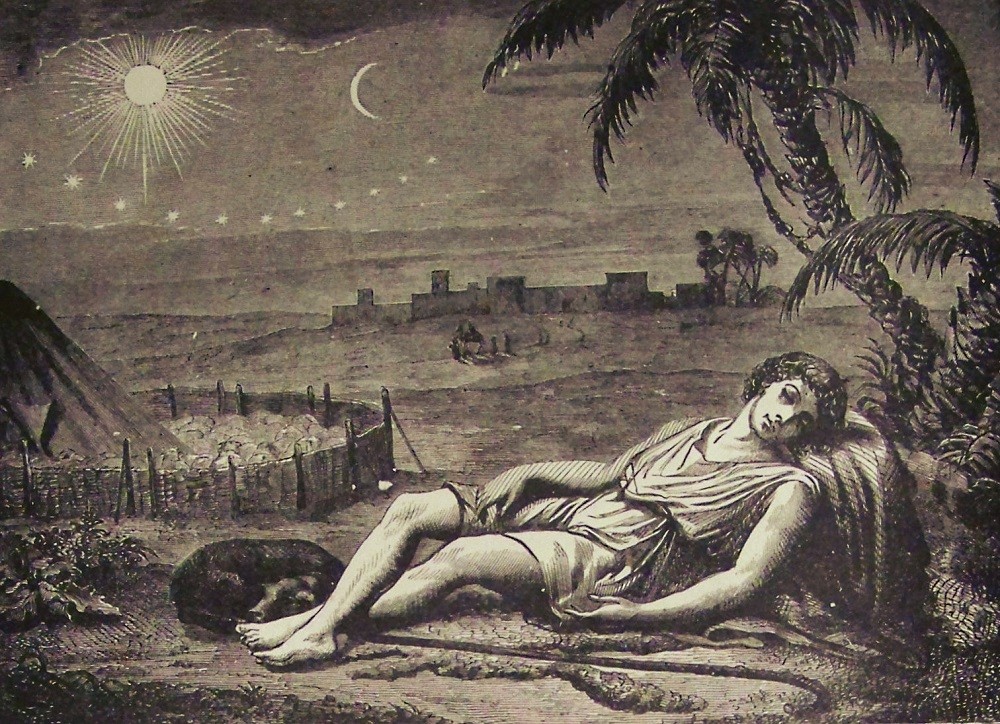
In dreams begin responsibilities

When we first meet Joseph, as a teenage boy, he is blessed with visionary dreams yet he is profoundly lacking in wisdom.  He foolishly flaunts his reveries at his brothers’ expense, thereby earning their enmity.  His dreams of dominion are, in fact, accurate—but he does not yet know what to do with them.  He speaks when he should be silent.  Joseph’s prophetic gifts run deep—but they blind him to the needs and feelings of others.  He is brilliant but insensitive, rich in vision but impoverished in empathy and action.  He fails to take responsibility for the consequences of his ill-timed and chosen words. 

Decades later, in this week’s portion, Miketz, Joseph grows up.  Pain and adversity teach him compassion.  Enslavement and imprisonment open his eyes to the suffering of others.   Joseph learns how to listen, how to see into the hearts of those around him.  This wisdom enables him to develop his prophetic potential into powerful action.

Pharaoh calls upon Joseph to interpret two parallel dreams.  Joseph does this—but does not stop there.  He goes on to offer policy advice based on his interpretation: Pharaoh should set up a detailed system over all of Egypt to collect and store up food during the seven years of plenty, so that there will be provisions when the seven years of famine strike.  Here, Joseph moves from words to acts.  He acknowledges that in interpreting dreams, he is a mere vessel, channeling God.  But the choice to translate those interpretations into a course of action is his alone.  As Rabbi Adin Steinsaltz notes: “From being a dreamer of dreams, Joseph became the person of the dream... a man who experienced the dream... as a burden and a responsibility and a course of action from which there could be no digression.  We may not all have the gift to accurately interpret our dreams.  But we can assume responsibility for them.  That is, after all, just assuming responsibility for ourselves.”

**********

This week’s midah/character trait is responsibility—in the Hebrew, acharayut. The contemporary Mussar teacher Alan Morinis notes that there are two possible Hebrew roots for this midah.  The first, achar, means “after,” suggesting that responsibility entails being mindful of the aftereffects, or consequences, of our choices.  The second possibility, acher, meaning “other,” reminds us to consider the effects of our choices upon others around us.  Joseph comes to understand both of these meanings of acharayut.  By the time he meets his long-estranged brothers in next week’s portion, he is very much a changed man.


The Jewish writer Delmore Schwartz wrote story whose title is adapted from a poem by W.B. Yeats: In Dreams Begin Responsibilities.  Indeed.   As we grow older—and hopefully, wiser and more compassionate—our challenge is to translate our dreams and visions into well-chosen actions.  During this week, which celebrates light and miracles, let’s think about how to live up to the responsibilities imposed by our dreams.

Mussar Practice for this Week (from The Mussar Torah Commentary)

During this week, identify a societal issue that you share with others with whom you are in the “same boat.”  Take a step, however small, to assume a piece of that responsibility.