Sunday, May 23, 2021

Portion Beha'alotechah: Humility/Anavah

From the time of his birth, at the beginning of the book of Exodus, until his death at the end of Deuteronomy, Moses is the Torah’s pre-eminent character.  His relationship with both God and the people of Israel, throughout his forty years of leadership, is unparalleled.  Thus he is known as Moshe Rabbeynu, Moses, our Teacher.   Torah tells us that his prophetic wisdom and vision will never be equaled.

What was the source of Moses’ greatness?  Of all his many virtues, this week’s portion, B’ha-alotecha, suggests that the most important is his humility.  Thus the text teaches: “Moses was the most humble man on earth.” (Numbers 12:3)

Rabbi Lawrence Kushner comments on the correlation between Moses’ extraordinary humility and his spiritual mastery.  In his book, I’m God, You’re Not, Rabbi Kushner notes: “The goal of spiritual life is to get your ego out of the way.  Silence the incessant planning, organizing, running, manipulating, possessing, and processing that are the ineluctable redoubts of the ego.  Not because these activities are bad or wrong or even narcissistic. . . but because they preclude an awareness of the Divine.  To paraphrase the Talmud, God says, ‘There ain’t enough room in this world for your ego and Me.  You pick.’”

In other words, humility is at the heart of Moses’ greatness because it is an essential pre-requisite for our moral and spiritual development.  When we become too full of ourselves, we forfeit our connection to God, wisdom, and authentic relationships [which may, in the end, all be synonymous].  If we wish to grow as people and as Jews, we must free ourselves from our inflated self-importance and insistence that we are constantly “right.”

Two hundred years ago, the English poet John Keats expressed this same notion in his theory of “negative capability”, which he described as “when man is capable of being in uncertainties, mysteries, doubts, without any irritable reaching after fact and reason.”  Keats points to Shakespeare and Coleridge as masters of this art, but we, as Jews, might look back farther, to Moses, as our guide.

******

Humility—in Hebrew, anavah—plays a central role in the Mussar tradition. Among the midot, it is foundational because as Rabbi Kushner notes, above, a person who lacks humility—who thinks they are better than others—cannot really learn and grow.  

But the Mussar masters remind us that it is critical to avoid confusing humility with humiliation, which is all too common a mistake.  Being humble does not mean being a self-debasing nobody; real humility is, instead, grounded in healthy self-esteem.  As with most midot, the goal is to maintain a proper balance between arrogance and self-loathing.  Humility is about occupying the proper amount of space in one’s life: stepping up when called upon to do so, while also leaving room for others.  Moses’s extraordinary humility does not preclude his assuming bold leadership; indeed, an essential part of it.  As the contemporary Mussar teacher Alan Morinis puts it in his beautiful book, Everyday Holiness: “No more than my space, no less than my space.”

**********

Mussar Practice for this Week:

Write yourself a note with the phrase, “No more than my space, no less than my space” and carry it around with you, reading it regularly over the course of the day.  

What does the practice of humility look like for you in your work and/or family life?


Saturday, May 15, 2021

Portion Naso: Generosity/Nedivut


If you are poor, more money will usually increase your happiness.  It is cruel to live without adequate shelter, access to good food, a solid education and other basic necessities.  But studies consistently show once you have those things, an ever-expanding income does not translate into a more joyous life.  Yet all too often we spend our life accumulating things rather than giving them away.   The notion that we can achieve contentment by accruing a bunch of stuff is perhaps the most damning and destructive lie at the heart of unbridled laissez-faire capitalism.  As Ecclesiastes realized three thousand years ago, amassing anything—wealth, fame, power and even knowledge—is, in the end, pure vanity.  The Rabbis put it succinctly: “Who is happy?  Those who rejoice in their own portion.”  Or in Sheryl Crow’s insightful take on this wisdom: “It’s not getting what you want—it’s wanting what you’ve got.”

In this week’s portion, Naso—the longest in the Torah—we find another version of this lesson.  Numbers 5:8-9 teaches: “Any gift among the sacred donations that the Israelites offer shall be the priest’s.  And each shall retain his sacred donations: what a person gives to the priest shall be his.”  By the standard reading, “his” is a reference to the priest, who receives the gift.  But the Talmud (Brachot 63a) offers an alternative interpretation, in which “his” refers to the donor.  In other words, as the commentary in Etz Hayyim notes, it is only when we give something away that the gift, and the good deed that it represents, becomes permanently ours.

Rabbi Lawrence Kushner captures the essence of this paradox in his path-breaking book, Honey from the Rock.  He writes of our central human challenge: “To learn that it is good for you when other people love other people besides you.  That I get more when others give to others.  That if I hoard it, I lose it.  That if I give it away, I get it back.”

In other words, the things that matter most—love, kindness, wisdom—do not follow the rules of the “dismal science” of economics.  Paradoxically, it is only when we share what we have that we can gain and grow.

**********

Our midah/character trait for this week is generosity—in Hebrew, nedivut.  Alan Morinis describes this path beautifully in his book Everyday Holiness:

God wants your heart.  Real generosity means not only giving something practical that will be of help to someone; it also means changing something in yourself.  Will your gift be just a thing, or will it be accompanied by joy, or empathy, or commitment, or love, or any of the other soul-traits that you cultivate in yourself?  When you undertake to give your heart as well, you change an element of yourself.  Each such act of generosity makes you into a more giving (or joyful, or empathic, or committed, or loving, or. . . ) person.  And when you change yourself, you change the world. 

Mussar Practice for this Week (from Every Day, Holy Day)

Do a different kind of generous act every day—one day with money, one day with time, one day with caring, one day with possessions, and the like.


Sunday, May 9, 2021

Portion Bemidbar: Silence/Sh'tikah


To experience the Divine, we must learn to embrace silence.

This coming Sunday night we will celebrate Shavuot, which our Rabbis called z’man matan Torahteynu—the time of the giving of the Torah.  The festival marks the high point of our sacred origin story, when we stood together to hear Holy One’s word at Mount Sinai.

In some ways, it’s a unique moment in our mythic history—yet the Talmud suggests that revelation did not end there.  The Rabbis insist that God still speaks to us: “Each and every day the Divine Voice issues forth from Sinai” (Avot 6:2)

So if the Holy One continues to be in dynamic relationship with us, what was so special about the events commemorated by Shavuot?   A passage from the Midrash notes that the difference was the utter silence which preceded God’s Ten Utterances:

R. Abbahu said in the name of R. Yohannan: When the Holy One gave the Torah, no bird chirped, no fowl flew, no ox bellowed, not one of the angels said, “Holy, holy, holy!”  The sea did not roar, creatures did not speak—the whole world was hushed into breathless silence; it was then that the voice went forth: “I am the Eternal your God.”

In other words, as Rabbi Lawrence Kushner writes, “The reason Sinai is so special and the reason why we are unable to hear Torah all the time is because the noise and static of this world drown out the sound of God’s voice.  Only at the time of the ‘giving of the Torah’ did God ‘silence the roar.’ At Sinai we could hear what had been there (and continues to be here) all along.” 

Often, as we imagine the giving of the Torah, we think of the pyrotechnics: thunder and lightning and fire.  But the key ingredient for hearing the Divine is, in fact, silence.  Elijah learns this when the Holy One pays him a visit in a cave where he is hiding on Mt. Carmel.  

As it is written, “God passed by and a mighty wind split the mountains—but God was not in the wind; and after the wind, an earthquake—but God was not in the earthquake; and after the earthquake a fire—but God was not in the fire.  And after the fire, a still, small voice.” 

In today’s high tech, 24/7 culture with its endless distractions, Shavuot offers a timely reminder that Holiness does not dwell amidst the sound and the fury; it reveals itself subtly in the calm that follows, when the noise dies down.  The still, small voice continues to speak to us, everywhere and always.  But most of the time, we do not hear it because our world is too loud and we are moving too quickly. 

Perhaps that is why the watchword of our faith is Shema—Listen!  This is our Jewish mission: to be still, to listen to one another, to our own better angels, and to hear in them the whispering voice of the Holy One.  The Psalmist declares, “Be still and know that I am God.”  The corollary to his teaching is both obvious and difficult: until we learn to embrace the silence, God remains out of reach.

**********

Our midah/character trait for this week is silence—in Hebrew, shtikah.  While some people are naturally inclined to quietude, most of us find it different to still both our tongues and our minds.  Yet this is essential to learning.  As the great medieval Spanish Jewish poet Shlomo Ibn Gabirol taught: In seeking wisdom, the first step is silence, the second listening, the third remembering, the fourth practicing, and the fifth teaching others. 

Mussar Practice for this Week (from Every Day, Holy Day)

Find at least ten minutes every day when you will be silent and seek inner stillness.


Monday, May 3, 2021

Portion Behar-Bechukotai: Emet/Truth


Self-deception is the root of much ill.

This week’s double portion, Behar-Bechukotai, completes the book of Leviticus.  Much of it is devoted to the sabbatical and jubilee years, which provide the land—and those who work it—with a prolonged rest period and serve as a reminder that, in the end, the earth belongs to God, rather than us.  It is in this context that we find a verse admonishing against shady real estate deals: “Do not deceive one another but revere your God, for I, the Eternal, am your God.” (Leviticus 25:17)

But the Hasidic Rabbi Simcha Bunem of Przysucha shifts the focus of this verse with a brilliantly incisive bit of commentary.  He taught: “Do not deceive anyone—not even yourself.”

Rabbi Bunem points to a profound psychological truth here, for of all the multifarious forms of deception in which we engage, none are so harmful as the ways we deliberately mislead ourselves.  

Why do we do this?  Often, to avoid pain.  It can be terribly difficult to face the truth about poor choices that we have made and in which we have become invested and enmeshed.  Even worse, we deceive ourselves in order to rationalize our doing things that, deep down, we recognize are wrong.  I have always believed that almost all of our moral shortcomings are failures of willpower rather than knowledge.  We know when we are transgressing.  Yet we engage in self-deception to justify our misdeeds.  We make excuses and conjure up mitigating circumstances—and, more damaging yet, eventually can come to believe our rationalizations.  Our Rabbis called this unfortunate propensity for self-deception the yetzer ha-ra, the Evil Inclination.  It is a huge barrier to transformative insight and personal growth.

If we wish to become better, wiser, more compassionate people, we must begin by being brutally honest with ourselves.  This sort of clear-eyed appraisal is arduous, indeed—but it is the only way forward.

“Do not deceive anyone.”  Even—or especially—yourself.

**********

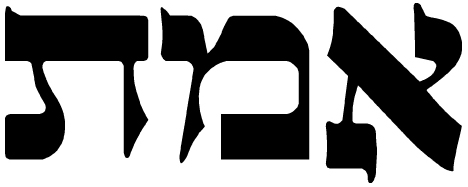
Truth—in Hebrew, emet—is our midah/character trait for this week.  The word begins with the letter alef, and ends with taf—the first and last letters in the Hebrew alphabet.  For our Rabbis, this teaches that the world begins and ends with truth.  In his book Everyday Holiness, Alan Morinis reminds us that we are all capable of seeing past deception, citing the words of Mussar teacher Eliyahu Dressler: 

Even after the desire of one’s own heart have persuaded one to accept the false way as true, they still know in their heart of heart that the truth path is “truer” than the other one. . . . Every human being us has the faculty of determining in their own heart where the real truth lies.

 Mussar Practice for this Week (from The Mussar Torah Commentary)

Set an intention to notice every time your instinct is to distort the truth in some way.  When you notice that instinct arising, take a moment to ask yourself if there is an element of hidden truth that is yearning to be noticed.


Sunday, April 18, 2021

Portion Acharei Mot-Kedoshim: M'chilah/Forgiveness


This week’s double Torah portion, Acharei Mot-Kedoshim, marks the halfway point of the Torah cycle, and it stands at the center of the text both geographically and metaphorically.  The nineteenth chapter of Leviticus contains many of the best-known moral imperatives from our tradition.  It commands us to strive for holiness, keep Shabbat, care for the poor, and honor the stranger in our midst.  It is also the source of the famous teaching: “Love your neighbor as yourself (v’ahavta l’rayechah camochah).


The words immediately preceding that “Golden Rule” are less widely recognized but of equal importance: “You shall not take vengeance or bear a grudge against your people.”  This implies that in order to love our neighbor, we must be willing to forgive their wrongdoings and not dwell on past hurts.  Of course, this is much easier said than done.  We tend to remember every time people hurt or slight us, much more vividly than we recall their acts of lovingkindness on our behalf.  This propensity to dwell on old injuries and injustices can easily lead to an obsession with victimhood that destroys our ability to move forward in our lives.

Recognizing this difficulty, Maimonides notes: “The desire for revenge is a very bad trait and we must do our best to relinquish it.  One way is to realize that many things that prompt our wrath are vanity and emptiness and are not worth seeking revenge for.”  To which the late, great contemporary teacher Rabbi Abraham Twerski adds: “Carrying resentments is like letting someone whom you don’t like live inside your head rent-free.  Why would anybody allow that?”

It is no accident that we read Kedoshim, with its injunction against grudge-bearing and vengeance, in this season of spring.  The omnipresent rebirth in the natural world reminds us that we, too, can start anew in our personal relationships.  And the journey from Pesach to Shavuot encourages us to leave behind the narrow places of heart and spirit that are our Egypts, our Mitzrayim.  Our path to Mount Sinai—and true freedom—starts with getting those destructive, rent-free tenants out of our heads.

**********
Mussar Practice for this Week 

This week’s midah/character trait is forgiveness, or m’chilah.  

It is customary to offer forgiveness every night before going to sleep.  The traditional bedtime prayers include this passage:

Source of the Universe:
I hereby forgive whoever has hurt me
And whoever has done me any wrong,
Whether it was deliberately or by accident,
Whether it was done by word or by deed
May no one be punished on my account

For the rest of this week, make this prayer part of your nightly routine.  Use it as an opportunity to make an examination of your conscience for the day.  You might do this following the practice of Rabbi Zalman Schachter-Shalomi, who taught: 

Check your relationships and make an act of forgiveness.
 
Recalling whatever frustration and hurt was experienced during the day, at the hands of others, visualize them written on slips of paper.  Rip these up one by one, fully forgiving those who hurt you as you say the words of the prayer.

Sunday, April 11, 2021

Portion Tazria-Metzora: Lovingkindness/Chesed

Sometimes the questions we ask are more important than the answers we give.  

This is why Rashi (Rabbi Shlomo ben Yitzchak) is considered the greatest of our traditional commentators.  Many of the sages who followed him strongly disagree with the explanations he offers to resolve difficult Torah passages—yet all recognize his genius in knowing the perfect questions to pose about them.

So what is the proper question to consider with this week’s double portion from the Torah, Tazria-Metzora?  The text focuses on tzora’at, a leprosy-like skin affliction.  Most of the Rabbis ask: “Why?”  They struggle to explain the etiology of this mysterious affliction.  The subtext of their inquiry is: “What causes people come down with tzora’at?”  Almost all of them answer: God afflicts people with this disorder as punishment for speaking ill of others.  Midrash Leviticus Rabbah even adds some additional failings that might bring on this disease, noting: “Seven types of behavior are punished with tzara-at: haughty eyes, a lying tongue, hands that shed innocent blood in secret, a mind that hatches evil, feet quick to do wrong, a witness who testifies falsely, and one who incites brothers to quarrel.”   

But I believe that for all of their wisdom, in this case, the classic commentaries ask the wrong question.  As Rabbi Harold Kushner teaches: “Our Sages often could not resist the temptation to ask, ‘What moral or spiritual failing may have caused this illness?’ Today we recognize that it is medically inaccurate and psychologically cruel to tell someone that he or she is afflicted with illness as a punishment for bad behavior.” Even when there are partially accurate “why” answers—“He got lung cancer because he smoked three packs of cigarettes a day”—they are neither helpful nor humane.

In the face of suffering, the real questions are not concerned with “why?”  They are, instead: What do we do now?  How can I help?  Which is the path of compassion?  Where are the possibilities of healing and love?

The prophet Isaiah reminds us that blessing is not found in asking why; it emerges out of deeds of lovingkindness.  We do well to heed his words:

When you pour yourself out for the hungry and satisfy the desire of the afflicted, then shall your light rise in the darkness and your gloom be as the noonday.

How do we know when, in the presence of suffering, we are asking the right questions?  When the answers call us to compassionate action.

**********

Our character trait to develop this week is lovingkindness, which is defined in Hebrew as chesed.  In the Talmud, Rabbi Simlai teaches that this trait is the very heart of Torah.  He notes: “Torah begins with an act of lovingkindness and ends with an act of lovingkindness, as it says: God made garments for Adam and Eve and clothed them.  It ends with an act of lovingkindness, as it says, God buried Moses in the valley. . . .”

**********

Mussar Practice for this Week (from Every Day, Holy Day)

Make a visit, a phone call, or send a card every day this week, as an act of lovingkindness


Sunday, April 4, 2021

Portion Shemini: Mindfulness/Muda'ut


Sanctify yourselves and be holy, for I am holy; neither shall you defile yourselves with any manner of swarming thing that moves upon the earth.
  (Leviticus 11:44-5)

This week’s Torah portion, Shemini, is devoted in large part to the laws of kashrut.  The eleventh chapter of Leviticus is, essentially, a long list of permitted and forbidden foods.  For mammals and sea creatures, the criteria are clear: we can eat only animals with cloven hoofs that chew their cud, and fish that possess both fins and scales.  Reptiles and amphibians are prohibited, as are all insects except locusts.  Birds are handled on an individual basis, without any specific criteria, though birds of prey are generally prohibited.  Chicken is in; hawks, eagles, and owls are out.  

Interestingly, the Torah gives no rationale for any of this.  But long after the fact, countless sages and scholars have offered explanations for our tradition’s dietary laws.  These conjectures include health/hygiene, spiritual discipline, the preservation of Jewish identity, and a reminder that all of life is holy and eating the flesh of any once-living creature is a form of moral compromise.

I find varying degrees of merit in all of these conjectures but for me, the most compelling reason to keep kosher to some degree or another is that it can be a powerful practice of mindfulness.  When we pay full attention to what we eat—including where it came from and how it was produced—we transform a universal animalistic necessity into a sacred act.  

Mindful eating practices include traditional kosher laws, ethical considerations around the treatment of animals and human food service workers, and production and consumption choices that minimize our carbon footprint and counter catastrophic climate change.  By eating with intention and awareness—as Torah urges us to do—we increase the holiness in our lives and help to heal our broken world.

In the end, of course, we all make our own choices, and we should be careful not to be harshly judgmental of others. It is essential to recognize that on our collective Jewish journey, one’s chosen path is often not the same as one’s neighbors’.  But the choices that we make should be informed and well-considered. As Rabbi Kushner concludes; “I don’t know if God cares about what I eat, but I know that I feel closer to God when I care about what I eat.”

**********

The Hebrew term from mindfulness—muda’ut—is a contemporary word based upon the ancient biblical term for knowing—la-da’at.  To know something truly and deeply is to play close attention over a significant period of time.  To gulf down a hamburger from a fast food restaurant is the antithesis of such knowing; mindfulness in eating asks us to consider the sources of our food and to savor its flavor. 

**********

Mussar Practice for this Week  

Pay real attention to what you eat.  Add a level of kosher and/or ethical awareness to your normal food consumption.  Offer a blessing or acknowledgment before or after eating.

Slow down and savor every bite.