Sunday, October 31, 2021

Toldot: New Life in Old Wells


For this year’s E-Torah cycle, we will approach the weekly portion as a springboard for a learning conversation.  Each week will offer a brief commentary, followed by a prompt for discussion, which you can do with a family member or a friend—or on your own as a sort of internal dialogue/reflection.

American culture puts a premium on innovation, and this often serves us well, as individuals and as a nation.  But sometimes reaffirming and renewing old wisdom is every bit as essential as creative invention.  As a timely example, consider the public health measures we currently employ to protect ourselves and our communities from COVID.  Our best strategy combines the cutting-edge miracle of m-RNA vaccines with the time-tested tactics of masking and social distancing.  

In the Torah’s tales of our patriarchs, Abraham and Jacob are the revolutionary innovators.  Abraham is the first Jew, embarking on an audacious pilgrimage into the unknown, in the service of an unprecedented monotheistic God.  Jacob is the radical who dares to wrestle with beings human and divine.

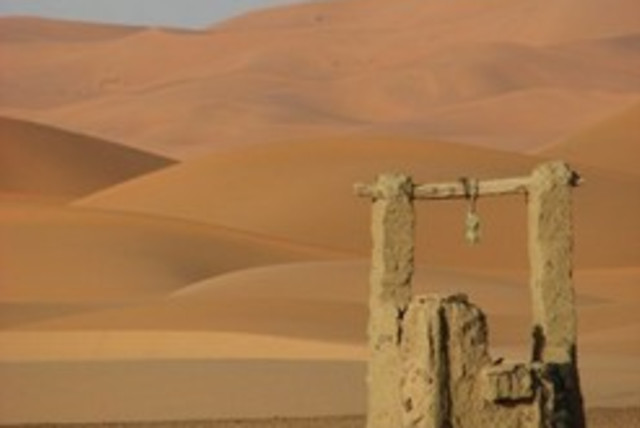
Isaac, by contrast, is a conservator.  In this week’s portion, Toldot, we read that one of his greatest accomplishments is that he “dug anew the wells that had been dug in the days of his father which the Philistines had stopped up. . . and gave them the same names that his Abraham had given them.” He is not a bold pioneer like both his father and his son—yet Isaac is every bit as important an actor in defining the Jewish people.  Our personal and communal lives sometimes call for intrepid creativity; at other times, we need patience, persistence and preservation.  

Conversation Question:

What do you most need in your life’s journey right now—innovation or renewal or both?


Sunday, October 24, 2021

Chayei Sarah: What's Love Got to Do With It?


For this year’s E-Torah cycle, we will approach the weekly portion as a springboard for a learning conversation.  Each week will offer a brief commentary, followed by a prompt for discussion, which you can do with a family member or a friend—or on your own as a sort of internal dialogue/reflection.

Isaac took Rebekah as his wife. He loved her, and thus found comfort after his mother’s death.

                        -Genesis 24:67

The first time that Torah speaks of one person loving another is in this week’s Torah portion, Chayei Sarah.  We’ve seen numerous partnerships and relationships in previous passages, but none are described as loving.  Perhaps it is no accident that the description is accorded to Isaac and Rebecca, the only monogamous couple among our patriarchs and matriarchs.  

As with every couple, both before and after them, their relationship is sometimes rocky.  Rebecca and Isaac struggle over infertility, and when they finally have twins, they have very significant differences in how they relate to their boys, Jacob and Esau.  In some key moments, they are not entirely truthful with one another, and at others, they fail to communicate clearly.  

And yet, we read, they alone amongst almost all of the Torah’s characters forged a relationship defined, from the start, by love.

In the Talmudic collection Pirkei Avot, the Ethics of our Fathers, we learn: All love that is conditional upon something—when that thing perishes, the love perishes.  But love that is not conditional does not ever perish.

Isaac and Rebecca’s love is not easy or perfect, but it does endure.  

Conversation Question:

Reflect on your most significant relationships—romantic, parental, friendship.  What small steps or adjustments might enhance the love you bring to those partnerships and make it more enduring and less conditional?


Sunday, October 17, 2021

Vayera: The Wisdom to Know the Difference


For this year’s E-Torah cycle, we will approach the weekly portion as a springboard for a learning conversation.  Each week will offer a brief commentary, followed by a prompt for discussion, which you can do with a family member or a friend—or on your own as a sort of internal dialogue/reflection.

"A time to be silent and a time to speak" (Ecclesiastes 3:7)

This week’s Torah portion, Vayera, begins with Abraham vocally challenging God and concludes with his silent acquiescence. When the Holy One tells him about the imminent destruction of Sodom and Gomorrah, Abraham repeatedly argues: “Will You sweep away the innocent and the guilty?  Far be it from You!  Shall not the Judge of all the earth deal justly?”  Yet just four chapters later, when God asks him to sacrifice his son Isaac, Abraham responds with obedient silence.

Why doesn’t Abraham stand up for his own family as he did for the strangers in Sodom and Gomorrah?  We don’t know.  His passivity is problematic for most of us, as it was for many of our Sages two thousand years ago.  But like Ecclesiastes, he seems to believe that there is a time for speech and a time for silence.  The trick, of course, is to recognize which is appropriate in any given instance.

Our circumstances are less extreme than Abraham’s, but we, too, wrestle with this question.  When do we protest and when do we go along?  When should we be silent and when should we speak out?

Theologian Reinhold Niebuhr addresses this challenge in what we now know as the Serenity Prayer.  I prefer Niebuhr’s earlier formulation, which asks: “Give us the courage to change what must be altered, serenity to accept what cannot be helped, and the insight to know the one from the other.”  

Conversation Question:

Reflect on occasions when you spoke out and challenged the status quo, and times when you held your tongue.  What principles might guide us in deciding which times call for silence and which for speech?


Sunday, October 10, 2021

Lech L'chah--Life's Journey


For this year’s E-Torah cycle, we will approach the weekly portion as a springboard for a learning conversation.  Each week will offer a brief commentary, followed by a prompt for discussion, which you can do with a family member or a friend—or on your own as a sort of internal dialogue/reflection.

********

The Holy One said to Abram, “Go forth from your native land and from your father’s house to the land that I will show you.” (Genesis 12:1)

Over many years of long-distance hiking and paddling, I have learned that those who make it to trail or river’s end are not necessarily either the most skilled or best conditioned adventurers.  I’ve seen many physically-powerful people falter, while those with far fewer natural advantages succeed.  Why?  Because the hardest part of any journey is in our own heads and hearts.  It’s not about who can walk thirty-five miles in a day—it’s about who musters the will to put on their wet socks and set out on the cold, rainy morning when they would rather remain in camp.  As Father Henri Nouwen taught: The farther the outward journey takes you, the deeper the inward journey must be.

This week’s Torah portion, Lech L’chah, marks the beginning of Abraham’s lifelong journey, as God asks him to abandon his native country and navigate by faith alone toward the Promised Land.  The physical hardships are considerable but our Rabbis remind us that for Abraham, too, the inner, spiritual journey is of the essence.  Noting that the Hebrew, lech l’chah, can be read literally as go to yourself, they teach that the real work of our lifetimes is an inward exploration.

Conversation Question:

Where are you on the arc of your own life’s journey—physically, and spiritually?  Are you on course, or is it time to explore in a new direction?  What do you need to keep moving forward when times are difficult?


Sunday, October 3, 2021

Noach: Reconciliation


For this year’s E-Torah cycle, we will approach the weekly portion as a springboard for a learning conversation.  Each week will offer a brief commentary, followed by a prompt for discussion, which you can do with a family member or a friend—or on your own as a sort of internal dialogue/reflection.

******

I have set my bow in the clouds and it shall be a sign of the covenant between Me and the earth.  When I bring clouds over the earth, and the bow appears in the clouds, I will remember My covenant between Me and you and every living creature, so that the waters shall never again become a flood to destroy all flesh.  (Genesis 9:11-15)

After the flood, there is vast repair work to be done. The ravaged land will slowly heal and the rescued pairs of animals will reproduce and replenish the earth.  But for Noah and his family, the psychological damage is devastating.  Their relationship with the Holy One is surely strained to the breaking point by the destruction they witnessed and the despair they bore through the raging storm.

How does God begin to heal that breach?  With the sign of the rainbow, a tangible symbol of the Divine promise to never again destroy life on earth.  But why a rainbow?

Ramban (Nachmanides, 1194-1270) suggests that it is an inverted war bow.  He explains that in the ancient world, where battles were fought with bows and arrows, when one side was ready to surrender, they would lift an inverted bow, much as today they might wave a white flag.  Thus, the Ramban notes, the inverted bow in the skies represents God’s gesture of appeasement.  It is, in short, a divine peace offering.

Conversation Question:
In this still-new year, can you identify a conflict in your own life that you would like to resolve?  What kind of gesture might you make toward that end?

Sunday, September 26, 2021

Bereshit: Endings and Beginnings


For this year’s E-Torah cycle, we will approach the weekly portion as a springboard for a learning conversation.  Each week will offer a brief commentary, followed by a prompt for discussion, which you can do with a family member or a friend—or on your own as a sort of internal dialogue/reflection.

This week we conclude the Torah, and immediately begin anew.

Deuteronomy ends with the death of Moses, for whom the people grieved for thirty days.  We read that never again did there arise a prophet like him, “who God knew, face to face.”  Then, without missing a beat, we open Genesis and affirm: “In the beginning, God created. . .”

What is the connection between these most famous of endings and beginnings?  Ecclesiastes teaches that “there is a time for birth and a time for death.”  But more often than not, those times overlap significantly.  All new beginnings include loss, the letting go of what was.  Each birth is also a little death.  Each death makes room for new life.

Moses dies—and then the world is born again.

Conversation Question:

In this season so full of losses, what are you mourning?  What opportunities do you see for new life?  Or, if the grief is too immediate and intense, what sustains you from moment to moment?


Friday, September 17, 2021

Yom Kippur Morning 5782: We Become Our Choices


The liturgy for these Days of Awe can be hard on the ears and heavy on the heart; the onslaught of language around sin and judgment can be overwhelming.  Sometimes we need to find different and more accessible ways to read the ancient words.  I think this is especially true of passages that seem to focus on Divine reprimand and retribution.  Here we might note that while we often speak of punishment and consequences interchangeably, there are significant differences between the two.  Punishment is fear-based, employing physical or emotional pain to coerce behavior.  Consequences flow naturally out of our choices, whether positive or negative.  Discipline grounded in consequences helps us recognize the relationship between our actions and their outcomes.  This awareness enables us to learn and grow.  

Understanding this distinction between punishment and consequences can significantly shift our approach to these High Holy Days.  Upon first consideration, the season’s readings are saturated with fearful imagery of an all-knowing Judge who exacts retribution for our transgressions.  In Avinu Malkeinu, we plead for Divine mercy, despite the unworthiness of our deeds.  And in Unetaneh Tokef, the paradigmatic prayer for these holy days, we proclaim: “In truth you are the Arbiter, Prosecutor and Expert Witness who writes and seals the fate of every living being.”  

For some Jews, a straightforward reading of these passages works just fine.  If the doctrine of reward and punishment suits you, gey gezunterheyt, no problem.  But for me—and I suspect for many of you, too—this theology does not work.  I cannot worship a God who demands fealty through fear.  Such power comes at too high a spiritual, emotional, and psychological cost, darkening the light of our better angels and isolating us from one another. Lest you think this a radical position born of secular modernity, note that a millennium ago, Rashi wrote that it is significantly better to serve God out of love than out of dread. [Rashi on Deuteronomy 6:5]

So what might it look like to read this season’s sacred texts through a lens of consequences rather than punishment?  Can we cultivate a theology of accountability that draws upon hope instead of fear?  Might we yet envision a God who disavows coercion and, instead, runs the world as a kind of classroom that rewards wisdom gained through experience and reflection?  The subtle moral universe in this scenario evades the easy algorithm of tit for tat.  Yet it affirms an elegant ethical calculus that the poet Jane Hirschfield describes beautifully in her poem, “Rebus”:

You work with what you are given,
the red clay of grief,
the black clay of stubbornness going on after. . . 

As water given sugar sweetness, given salt grows salty,
we become our choices.
Each yes, each no continues. . . 

If we reconsider Unetaneh Tokef from this very different perspective, we might understand the text not as a threat designed to scare us into submission but as a reminder of how much our own choices determine our fate.  The God in this re-reading doesn’t author the Book of Life; instead, She metaphorically holds it to our eyes to show us the story we’ve written for ourselves:

Va-tiftach et sefer ha-zichronot u’m’aylahv yikarei v’chotem yad kol adam bo—You open the Scroll of Recollections which reads itself aloud, for the seal of every person’s hand is in it.

**********

When we approach our own lives this way, we shift responsibility from a supernatural God to our ourselves and our communities.  In the magnum opus of Jewish medieval philosophy, the Guide of the Perplexed, Maimonides leads us in this direction, suggesting that 
much—though not all—the suffering for which we blame the Creator is actually an outcome of our own poor decision-making.  As he notes: People lament over their misfortunes, yet more often than not, we are afflicted due to our misguided actions.  Were he alive today, Maimonides would undoubtedly see the worsening pandemic for what it is: less an act of God and more the result of human folly that keeps half our population unvaccinated and unmasked, thus promoting the spread of the virus and the proliferation of new variants.

Or as our Torah portion for this morning asserts, we all decide, every day, between life and death, good and evil—then deal with the consequences of our choices, which affect both ourselves and those around us. Choose blessing and life, God urges us, so that you and your descendants may endure on the good land I am giving you.  Our sacred calling is to do everything in our power to embrace the blessing rather than the curse—and to learn and grow from the times when we fall short and choose poorly.  

**********

In this spirit, I’d like to conclude by turning to a passage we read earlier this morning.  For some of you, it may be unfamiliar, though it is an ancient Torah text that comprises the second of the traditional three paragraphs of the Shema.  You won’t find it in Reform siddurim, because the progressive rabbis and teachers who edited those prayer books could not stomach the literal message, in which, following the translation in the Conservative Siddur Lev Shalem, God proclaims:  

V’haya im shamoa—If you heard and obey my commandments. . . I will grant seasonal rain for your land, each autumn and spring.  I will provide grass for your herds and you shall eat and be satisfied. . . But if your hearts stray and you do not listen, God will close up the sky so that there will be no rain and the earth will not yield its produce and you will quickly disappear from the good land that God is giving you.


I can empathize with my Reform rabbinic forebears that chose to omit these verses because they read them as an anachronistic theology of reward and punishment that is not borne out in the world we inhabit.  Yet I believe the time has come to reconsider their decision, because if we re-read the text through the lens of consequences, its message has never been timelier.  Here is Richard Levy’s translation from our machzor, On Wings of Awe:

If we can hear the words form Sinai. . .If we can serve all that is holy, we shall be doing all that humans can to help the rains to flow, the grasses to be green, the grains to grow up golden like the sun, and the rivers to be filled with life once more.   And all the children of God shall eat and there will be enough.

But if we turn from Sinai’s words. . . then the holiness of life will contract for us.  Our world will grow inhospitable to rains from heaven, and the produce of the earth will not be ours.  Or worse, it will be ours unjustly, and our acts shall isolate us from the flowing waves of green and gold. . .  Let us therefore teach these words to our children, listening to our children teaching us—that our generation may be as numerous as the stars of heaven and the dust of the earth, as faithful as the living waters that unite them all.


With this reading, Torah directly addresses the existential question of our age—catastrophic, human-caused climate change.  The choice couldn’t be clearer, or more urgent: if we heed our better angels, future generations might yet survive and thrive.  If we turn away, they will face one disaster after another, imperiling all life as we know it.

This is not about punishment; it’s nothing more—or less—than the high stakes consequences of our decisions.  And let there be no doubt—our children and grandchildren will surely see this critical moment in that light.  If we bequeath them a dark, diminished world perpetually battered by fire, flood, and famine, they won’t fret that God is punishing them for their sins; they will, instead, angrily note that we, their forebears, knew the cost of our actions—and inactions—and nonetheless failed to change.

Our time for teshuvah is quickly ticking away and our opportunity to preserve the earth’s beauty and security for future generations is drawing to a close.  Yet if we muster the collective courage and will, we can still act on their behalf, and on behalf of all of God’s creation.

As Hillel taught: If not now, when?

My friends, this is the hour to let go of the archaic language of Divine wrath, of reward and punishment, which diminish our powers and weary our hearts.  It’s all about consequences—where the choice is still our own, and we might yet learn and grow.  The future is in our hands.  Let us hearken and choose life, for ourselves and our posterity, so that they might long endure on the good land gifted to us.

Ken y’hi ratzon