Sunday, October 23, 2022

E-Torah October 23 (Avot 1:2)--The Head, the Heart, and the Hand

For this year’s e-Torah, I will be featuring passages from the Talmudic tractate Avot, a compilation of the ethical, spiritual, and political teachings of second-century Rabbis.  I’ll be approaching this venerable text through the lens of Rabbi Shmuly Yanklowitz’s Pirkei Avot: A Social Justice Commentary.

Avot 1:2—Shimon the Just was among the survivors of the Great Assembly.  He used to say: The world stands on three things—on Torah, on spiritual service, and on kind deeds.

The second lesson in Pirkei Avot is familiar to many of us as the song Al Shlosha D’varim.  

It teaches that Torah study, spiritual growth (Avodah), and acts of lovingkindness (G’milut Chasadim) constitute a kind of three-legged stool.  As Rabbi Yanklowitz notes, in this understanding, each leg is not merely one-third of the whole stool’s support; each is, instead, absolutely essential—lacking just one, the entire structure collapses.  

Why are these particular three things the pillars of the Jewish world?  To answer this, I turn to the wisest graduation speech I have ever heard, delivered by Miss Patti, the director of the Montessori House for Children, at my daughter Tanya’s kindergarten graduation.  Her topic was: “The Head, the Heart, and the Hand.”  

Use your heads,” she advised her young charges and their parents.  “Think about your choices and their consequences.  This is how we change and grow.”

Cherish your hearts,” she added.  “Nurture compassion.  Acknowledge your full range of feelings and emotions.  This is how we open ourselves to one another and to the countless gifts the world offers every day.”

And put your hands to good work,” she concluded.  Turn your thoughts and feelings into positive actions.  Make a difference.  Help others.  Repair what is broken.  Fix what is unfair.  Create beauty.”

Miss Patti—a proud Basque Catholic—didn’t know Talmud, but her categories of head, heart, and hand correspond perfectly with Shimon the Just’s three imperatives.  Learning—Torah— is all about the head, the radical notion that through knowledge of self and others, we can improve ourselves and our communities.  Spiritual service—Avodah—is the language of the heart, the path of love, compassion, and emotional awareness that gives the spirit wings.  And kind deeds—G’milut Chasadim—are the work of the hand, the way we put ethics and emotion into action, sowing seeds of peace and liberation in our broken world.  Each is indispensable; all three are inextricably bound together.

Head.  Hands.  Heart.

Torah, Avodah, G’milut Chasadim.

This is our sacred Jewish calling.


Sunday, October 16, 2022

E-Torah October 16--Avot 1:1

For this year’s e-Torah, I will be featuring passages from the Talmudic tractate Avot, a compilation of the ethical, spiritual, and political teachings of second-century Rabbis.  I’ll be approaching this venerable text through the lens of Rabbi Shmuly Yanklowitz’s Pirkei Avot: A Social Justice Commentary.

Avot 1:1—Moses received the Torah at Sinai and transmitted it to Joshua, Joshua to the elders, the elders to the prophets, and the prophets to the Men of the Great Assembly. They said three things: Be patient in [the administration of] justice, raise many disciples and make a fence round the Torah.

Pirkei Avot begins by establishing a line of Torah transmission that begins with Moses and will continue through all of the Sages quoted in the forthcoming chapters.  That chain—in which we, our children and grandchildren are the latest links—embraces both commitment to tradition and creative innovation.  Each generation pays homage to their teachers and reinterprets their wisdom to meet the needs of changing times and circumstances.

The story is told of a congregant who asks the new rabbi why she sometimes modifies or departs from the practices of the previous rabbi—her father.  She replies: “In fact, I diligently follow my father’s example—just as he honored his own rabbinic father by finding his own way, so do I.”

Rabbi Abraham Isaac Kook taught: “The old must be made new, and the new must be made holy.”

How can we creatively honor and renew our own familial and communal traditions?


Friday, October 7, 2022

Kol Nidre 5783: In Hopelessness, Hope


A podcast interview from a couple months ago poised a challenge I’ve been wrestling with in anticipation of these Days of Awe.  The speaker—English poet, playwright and hip-hop artist Kae Tempest—lamented: 

Sometimes I feel like hope is the most antagonistic, violent concept.  Sometimes I hate the thought of it.  It feels so untrue and unreal, so far away from the reality of what it’s like to persevere.

Her words took me aback. For most of my life, I’ve considered hope one of a very few unalloyed virtues that still hold across cultural divides—a vestige of sacredness in our fractured world.  Hope obviously undergirds most faith traditions, but I’ve also witnessed its powerful pull on atheists, agnostics and, especially, sports fans of every persuasion.   What loyal booster of a habitually losing team hasn’t proffered the enduring credo, “Wait till next year!”  And even the most cynical of professions—politics—routinely traffics in the rhetoric of hope, from Ronald Reagan’s “city on a hill” to Shepard Fairy’s iconic poster of Barack Obama.  

As a rabbi, I have been asked to offer hope to dejected health care workers and exasperated activists weary of losing battles in our state legislature.  These good folks sought me out as a representative of the Jewish people, who have endured millennia of suffering yet still proudly sing our national anthem, HaTikvah—the Hope.  While I’m no expert on maintaining hope in hard times, I have done my best to respond with an open ear and empathetic heart.

Then along comes Kae Tempest, with a passionate counter-cultural plea that upends many of my fundamental assumptions.  So where did I turn?  I posted Tempest’s words on Facebook and asked you to share your responses, which were powerful, helpful and, not surprisingly, multi-vocal.  I learned from all of you—and also from a collection of books whose titles included Hope Without Optimism; Happiness for People Who Can’t Stand Positive Thinking; and, for scatological skeptics, Everything is ****** (expletive deleted).  I also gleaned insight through conversations with colleagues and family members, especially my daughter Rachel who had much to offer on the subject.

As I read and listened, I came to appreciate those books’ negative take on my often-clichéd understandings of hope.  I revisited High Holy Day sermons I’ve delivered over the last few years, and upon reflection, recognized that my optimism—which was never really my strong suit to start with—frequently faltered.  I tried to offer the rabbinical equivalent of “Wait till next year—l’shanah ha-ba’ah b’Yerushalayim—only to see each “next year” serve up diminishing democracy, staggering gun violence, rising bigotry, dangerous conspiracy theories, lingering pandemic, and stunning apathy in the face of existential climate catastrophe. As I prepared for this fall, I realized I couldn’t in good faith offer more of the same.  Like Kae Tempest, I’m feeling that hope as I’ve hitherto known and preached it, really does feel “so untrue and unreal, so far away from the reality of what it’s like to persevere.”  I’ve discovered that for many people, false hope can breed the kind of complacency that keeps us mired in troubled relationships, noxious workplaces, and all sorts of dark and dangerous circumstances. We convince ourselves that if we just wait it out, things will get better. Writer Wendy Olson explains: 

When we hope for something that isn’t likely going to happen, we resist moving on towards anything else.  Hope will torture you, will constantly remind you of the world you do not inhabit, of the one that is just at the tip of your fingers yet always eluding you. If hope is a tether keeping you attached to misery in the name of romanticism or wishing, then it is time to cut that tether for good

For unmoored hope can easily collapse into crushing disappointment. As a long-suffering English football fan tells the over-exuberant American coach Ted Lasso, “It’s the hope that kills you.” 

******

As in the personal realm, so, too, in the political sphere, hope can be toxic.  As Dr. Miguel de la Torre writes in Embracing Hopelessness

Hope, as an illusion, is responsible for maintaining oppressive structures.  When all is hopeless, when there exists no chance of establishing justice, the only choice left for the oppressed is to “screw” with the structure. . . By upsetting the norm, an opportunity might arise that can lead to a more just situation. . . Hopelessness is what leads to liberatory action.

Our foundational Jewish redemption narrative concurs.  As most commentators reckon, we were slaves in Egypt for over four hundred years.  Generations of Israelites quietly yearned for liberation but found none.  Only when they surrendered all hope as they’d known it and desperately groaned under their servitude—only then did God take notice, remember the covenant, and launch the course of events that led to our deliverance.

******

In hindsight, none of this skepticism should have surprised me, for Judaism has never been overly sanguine about either personal or communal hope.  So much of the Torah is a chronicle of failure.  Consider the book of Genesis, which opens with Adam and Eve, Cain and Abel, Noah’s Ark, and the Tower of Babel—which is to say exile, fratricide, genocide, and exile again.  From that inauspicious start, we move on to our patriarchs and matriarchs, whose stories revolve around dysfunctional marriages, terrible parenting, and murderous sibling rivalries.  As my teacher Rabbi Chanan Brichto pointed out, there isn’t a single family there you’d want to emulate.  And so it goes. . . through most of Exodus, Leviticus, Numbers, and Deuteronomy. As soon as we leave Egypt, we complain we want to go back.  For the next forty years, we wander and whine, and when we finally reach the Promised Land, Moses, who shouldered the burden of all that kvetching is barred from entry, denied the realization of his whole life’s labor.  One frustration follows another. Later, in the Prophets, we see that even God’s fervent hopes are often foiled.  Isaiah notes: “The Holy One hoped for justice--mishpat, but behold, injustice--mishpach; for equity—tzedakah but behold, outrage—tza’akah.”   The brilliant Hebrew wordplay hammers home how fine the line that separates the prophetic dream from the harsh reality.  

******

So where does that leave us?  How do we face the future in our own troubled times?  Dante imagined the gate to Hell emblazoned with the grim words, “Abandon hope, all who enter here.”  Is that our tragic fate?

No.  Our Jewish heritage is not naïve, but neither is it nihilistic.  It rejects trite understandings of hope, but also implores us to choose life, to persist through darkness and despair, or, to return to Kae Tempest, to persevere.  Which brings me to the profound paradox at the heart of this matter: it is precisely by acknowledging our hopelessness that we conceive new incarnations of tougher, truer hope.

The twentieth century poet, professor, and preacher Amos Wilder expressed this eloquently in his dictum: the zero hour breeds new algebra.  When we hit the nadir of possibility—that’s when our capacity for renewal and reinvention is born.  Or as my lifelong rabbi, Bob Dylan, famously put it, “When you’ve got nothing, you’ve got nothing to lose.”

For those working their way through twelve step programs, this paradox is at the heart of recovery.  As two friends on that challenging, lifelong road related to me: Hopelessness saved my life.  Hitting rock bottom is sometimes what it takes to change everything. . . . The best thing I did is give it up and accept reality.  That’s when I found joy.

So, too, on a global scale, I believe it was the decades of hopelessness crystalized in the senseless murder of Mahsa Amini that ignited the courageous protests of Iranian women that may yet change the moral and political order of that nation.  

The zero hour breeds new algebra, indeed.

******

A profound Jewish expression of this principle has its origins in a rather unlikely place—the Talmudic tractate Baba Metzia, a lengthy discourse on the laws of lost and found property.  The central focus in that discussion is the concept of ye’ush, which literally means “to give up on.”  One who finds a lost object must make every effort to return it to its owner, so long as the owner has not yet made ye’ush—has not given up on recovering the item. But once the owner can be presumed to have done ye’ush, to have concluded their search for the object because it is of little value or has no distinguishing marks, the item becomes free for the taking.  Rabbi Adam Greenwald notes:

In its original context, ye’ush referred only to lost physical property but its spiritual power extends far beyond that definition. There can be a letting go of disappointments, of hopes and desires.  This can be sad, because it means surrendering the hope that what was lost might someday be restored, that what is broken might ever be repaired.  But ye’ush can also be a source of liberation, an invitation to honor loss and then get on with the rest of life. 

This is, of course, easier said than done.  Ye’ush is a last resort, a rabbinic dispensation for despair. Yet it can ultimately be an act of grace and healing.  Surrendering to sadness can be the beginning of joy and heretofore unknown possibilities.

******

Earlier I mentioned HaTikvah—“The Hope”—Israel’s national anthem.  Perhaps its most famous line is this: Od lo avdah tikvateynu, ha-tikvah bat sh’not alpayimOur hope of the last two thousand years is not lost—to be a free people in our own land.  These words are, obviously a kind of straightforward hymn to hope.

But history tells a more complex and ambiguous tale.  For centuries, traditional Jews did hold fast to their hope of returning to Zion—but that’s not what got the job done; indeed, in the end their faith proved an obstacle.  Their piety was too passive, waiting for the Holy One to bring the messiah and gather in our exiles; they dismissed the notion that we might humanly hasten the task as a sacrilegious negation of God’s plan.  That why the land of Israel was largely built by secular pioneers who rebelled against the old ways, abandoned the faith of their parents, and took matters into their own hands.  Theirs was the chutzpah of hope surrendered and reborn.

******

If ye’ush is the Hebrew embodiment of that spirit, Yiddish offers another word for hope born of hopelessness—tzebrokhnkayt—which translates roughly as “the quality of broken-heartedness that confers strength in healing.”  In a June 2022 Slate magazine article, journalist Dahlia Lithwick turns tzebrokhnkayt into a manifesto for our age: “Let’s not be OK. Let’s find power in not being OK. Let’s honor our brokenness—and the brokenness of our country—by finding the collective strength to fight for change.”

******

My friends, on this Yom Kippur, tzebrokhnkayt is the order of the day.  We live in a badly broken world.  As Jews, as Americans, as global citizens, too many of our fondest hopes and dreams lie torn and tattered at our feet.  But that’s not the last word.  Listen to the wisdom Canadian writer Kate Bower shares in her “Blessing for When Faith Breaks Your Heart”:

Blessed are you standing among the ruins of a faith 

that once felt so sturdy,

now turned to dust under your feet. 

The certainty you once had, gone. 

The community you loved, dissipated.

The hope you held dear, hard to find. 

Instead, what’s taken up residence 

is the very stuff that seems counter 

to what you imagined:

Disappointment. Doubt. Disillusionment. Despair. 

In this new landscape, may you practice the courage to find the others

who make space for your questions without easy answers,

who celebrate doubt when it makes room for more faith,

who search high and low for a defiant hope born amidst despair. 

Bless you, dear one. You who don’t give up wrestling,

who have eyes to see something new being rebuilt on top of what was. 

Blessed are you who walk away wounded, yes. But changed.

******

I leave you with a story, a classic bit of Jewish humor that contains both laughter and truth, as our best jokes always do:

God’s voice rings forth from the heavens proclaiming that in one month, a second deluge will wipe out the entire world, with no possibility for repentance.  The die is cast.  The floodwaters are coming.

What to do?  Leaders of all the world’s religions gather their communities and implore them to help avert the decree.  

The Pope calls for Catholics to pray the rosary.

The Buddhist Roshi advises her people to meditate on suffering.

The Imam tells Muslims to submit to the will of Allah.

And the Protestant preachers implore their congregations to faithfully read the Good Book.

But what does the Rabbi do?

She gathers the Jews and declares: “All hope for this world is lost.  Let us weep and say Kaddish for life as we have known it.  And then, let’s get to work, because we’ve only got thirty days to learn how to live under water.”

Friends, on this sacred day, in this new year, let us learn together.

Ken y’hi ratzon


Thursday, September 29, 2022

Rosh Hashanah Morning 5783/2022: Not Every World Is Meant to Be


Ha-yom harat olam—today the world was born!  So we proclaim upon sounding the shofar, which recalls the cry of labor pains.  Last night I spoke of Rosh Hashanah as a celebration of that creation.

But this morning, I want to affix an asterisk to that claim, for long ago our Sages suggested that this universe wasn’t God’s first effort at world-building.  They arrive at this surprisingly contemporary cosmological twist through a close reading of the biblical text.  As a bit of background, it is helpful to know that the Rabbis believed God creates life using Hebrew letters.  So what happens when they apply that assumption to the Torah’s opening word, b’reshitIn the beginning?  They’re puzzled because given their premise, Torah should start with the letter aleph, the first in the Hebrew alphabet.  Yet b’reshit begins with bet, the second letter.  Why did God seem to skip the aleph and commence creation with the letter bet?


In the Zohar, the magnum opus of Jewish mysticism, our Sages offer an ingenious answer grounded in one of their favorite practices—wordplay.  Zohar notes that the Hebrew for the number one thousand—eleph—is very closely related to the letter name, aleph.  From this they glean that the Holy One’s work of creation did, in fact, actually begin with aleph—for God formed and destroyed one thousand worlds before finally turning to the bet of bereshit to fashion the one we know and inhabit.  This naturally leads to a classic Talmudic debate, where one side argued that the Holy One actually created and then demolished all of those worlds, while the other insisted that She merely contemplated then terminated them long before they were born.

I recognize that their medieval science is archaic and the intricacies of rabbinic hermeneutics aren’t for everyone, but our Sages’ notion of prior worlds that were not meant to be raises a host of interesting and important questions that remain strikingly germane in our time and place.  In pursuit of insight and empathy we might imagine ourselves in God’s place: What were those unique universes like and how close did they come to fruition?  Why did God decide to destroy them?  And how did God feel through the long and trying labor of conceiving and aborting so many potential worlds?

******

There are, of course, no definitive answers to these questions.  Our responses are a kind of modern-day midrash, the sacred and essential Jewish work of building creative bridges between ancient texts and current contexts.  Like all of our tradition’s conjectures about ultimate things, they reveal far more about us than they do about the Holy One, who remains a deep mystery.  That’s something to celebrate, because every encounter with God becomes a powerful mirror into ourselves and the human condition.  With that in mind, how do we imagine the drama around a thousand worlds created and destroyed?  

******

The Kabbalists envisioned these hidden worlds as ubarim—embryos God might have birthed but ultimately aborted.  I imagine each of these pregnancies came with its own unique circumstances.  I picture some as deeply desired and long in the making, beloved to the Holy One, yet for some mysterious reason, unknowable even to her, not destined to be.  I see her weeping for their loss, for their promise and potential tragically unfulfilled.  Perhaps others were beautiful but not quite right, lacking some essential quality they needed to endure.  Some of those myriad worlds may have been doomed by bad timing—on a slightly different occasion, each could have been the one, but the moment wasn’t ripe.  I can also imagine instances where the potential world might well have worked just fine—but God Herself wasn’t ready, was not yet prepared to meet the ceaseless demands of a magnificent but also deeply needy universe that would require constant attention, nourishment, patience, and love.  Perhaps God needed to mature a little more before taking on that awesome responsibility—to grow, as it were, into the terrifying role of being a Creator and Sustainer of life.

Or maybe each of those destroyed worlds simply couldn’t come to be because this one—our own deeply imperfect but precious world—always lay in wait, and if another had been born, we and all we know would not be here.

******

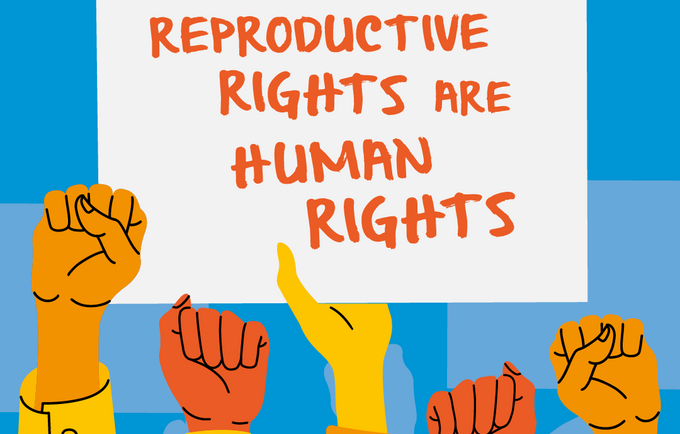
Which brings me back to here and now and, at long last, to the moral significance I make of the ancient rabbinic tale I’m telling—namely, the spiritual imperative of reproductive justice for all women and non-binary folks capable of bringing children into the world that we inhabit.  With no thanks to the US Supreme Court and the overwhelming majority of our Idaho lawmakers, the intensely personal matter of abortion has become an oppressive partisan political debacle.  I’ve spoken and written about the politics and legalities around reproductive rights many times over the last three decades, from this pulpit and in my column for the Idaho Statesman.  I have oft-noted that in our tradition, human life unequivocally begins at birth rather than conception, and therefore the mother’s health and welfare take precedence over that of the fetus she is carrying.  Abortion bans are, therefore, not only inhumane; they are also substantial violations of Jewish women’s religious freedom, because they impose conservative Catholic and evangelical Christian values even when they directly contradict our own.

But on this sacred morning, I want to shift, now, from the political realm to faith and ethics, and why reproductive justice is a core Jewish spiritual practice.  We began with Rosh Hashanah’s defining liturgical proclamation—Ha-yom harat olam—which I have heretofore translated, according to the words of our machzor, as “Today the world was born!”  But that’s not the true definition of the verb harat, which actually refers not to birth but conception and pregnancy.  The more accurate translation, then, is “Today the world was conceived—today God is pregnant with our universe!”  And as we now know, this is hardly her first pregnancy!

So what spiritual commitments follow from this understanding?  To determine this, we should note our foundational Jewish obligation to imitate God.  In the Holiness code that sits in the geographic and moral center of the Torah, God tells us: “Kedoshim t’hiyu, ki kadosh ani Adonai elohaychemYou shall be holy, because I, Adonai your God am Holy.”  To which the Rabbis add: “Just as the Eternal One is compassionate and gracious, so must we act with compassion and grace.”  This is our guiding ethical principle: we are to follow God’s example in our own lives.  And as our Sages duly note, that privilege empowers us to be co-creators with the Divine—shutafim la Kadosh Baruch Hu b’ma’aseh v’reishit—partners in the ongoing work of creation.

For God, that sacred labor began with the abortion of a thousand worlds before the birth of this one.  From this we learn that not every world is meant to be.  As God’s partners, we too, are invested with the awesome power of choosing when to birth new life.  Like God, women should be empowered to weigh their options with appropriate deliberation and humility and, ask the hard questions—sometimes alone, at other times in consultation with their loved ones : Am I prepared to provide for this potential child for the rest of my life?  Do I have the spiritual, psychological and material resources, and the support of a caring community, that I will need to raise a son or daughter at this moment in time?  Will carrying this pregnancy to delivery be safe for my own physical and mental health? 

If the answer to any of these questions, or others like them, is no—if the pregnancy is untenable and/or undesired—in both extreme cases like rape and incest or more commonly in other more ordinary adverse circumstances, everyone carrying life within her has an inalienable ethical right to determine whether the world she bears is meant to be.  She may weep for the lost worlds, as we do with infertility, miscarriage, and other heartbreaking losses—but God’s ordeal in creating and destroying worlds teaches us that in a just and compassionate society, every child is wanted and loved.

******

Ha-yom harat olam—today God conceived the world—this beloved world, Her one thousand and first, which she chose to deliver into life.  My friends, may we offer our profound gratitude for that blessing, for the privilege of being the one She chose, and may we honor Her choice by affirming that power for women everywhere.


Rosh Hashanah Evening 5783/2022: Let the Earth Teach You Torah


Tomorrow, as on every Rosh Hashanah, Jews everywhere will proclaim, “Ha-yom harat olam—Today the world was born!”  We will celebrate with apples and honey and the sounding of the shofar.  Yet one guest will be conspicuously absent from the party—the birthday girl herself.  Instead of feting the earth that houses and sustains us, we confine our New Year concerns to our Jewish lives—missing the mark and making teshuvah, what we’ve done and failed to do.  While these matters are, indeed, important, our narrow focus on ourselves is deeply problematic.  After all, the world is 4.5 billion years old and home to an estimated 8.7 million species of flora and fauna, not to mention the countless seas and sands, peaks and plains.  Our human existence amounts to the blink of an eye.  And from the perspective of the mountains, to which the psalmist raised his eyes for help, our vaunted Jewish history is but a watch in the night.  

**********

How and why have we come to this place, where our Rosh Hashanah rituals largely ignore the holy Creation they purport to acclaim?  

It wasn’t always this way.  In the beginning, and for most of our history, we lived in intimate reciprocal relationship with the More-than-Human World.  Our planet was enchanted, a living ecosystem of plants and animals, rocks and rivers, inseparably bound with one another. Our biblical ancestors conversed with snakes and stones, marked time by the circle of the seasons, and reveled in mountains and brooks that sing for joy and leap like young rams. Of course there were also devastating storms, deadly disease and dangerous predators—but they, too, were part of the animistic earth we all shared together.

With the rise of Greek philosophy, this changed.  Hellenism gave us many gifts, from the foundations of modern science to the Passover seder.  But its disenchantment of nature came at a high cost.  Aristotle reconfigured our mutual relationship with our environment into a hierarchical Great Chain of Being, with humans on top, manipulating the lower-tiered animals, plants, and minerals.

With the scientific revolution, the Western world grew even more alienated from the Creation.  While most indigenous cultures maintained the old ways, Europe abandoned them.  Rene Descartes conducted torturous experiments on animals, who he insisted were unthinking and unfeeling automatons.  Newtonians drew a strict distinction between mind and matter, with us as actors and the rest of the world inert stuff to be acted upon.  Hence the perspective that dominates our culture to this day, which envisions nature as a collection of objects rather than a communion of subjects.  

For the most part, the Jewish world followed this path.  We turned away from rabbinic and kabbalistic texts that celebrated other beings as embodied souls or nefashot, fashioned, like us, in the image of God.  While our greatest sage, Moses Maimonides, insisted that the Holy One did not form the world for humanity’s sake, we nevertheless enthroned ourselves as kings and queens over a diminished Creation.

And so here we are today, lost and lonely residents of a planet brought to its knees by our unsustainable lifestyles.  Our estrangement from the natural world is sickening both ourselves and our environment.  Author Richard Louv defined our modern malady as “nature-deficit disorder.”  And here’s how native American writer Leslie Marmon Silko diagnoses the Western worldview in her book Ceremony:

They see no life.  When they look

They see only objects.

The world is a dead thing for them. . . 

The deer and bear are objects.

They see no life.

They fear.

They fear the world.

They destroy what they fear.

They fear themselves. 

Living this way, it’s no wonder we fail to invite the world to her own birthday party.

********

But all is not lost.  Slowly but surely, a new paradigm is emerging that marries a stunning, cutting-edge approach to the life sciences with the rich and ancient spiritual vision of an animistic earth.  Twenty-five years ago, eco-philosopher David Abram published his pathbreaking book The Spell of the Sensuous, which teaches that our humanity is inexorably formed in concert with the More-than-Human world. Abram notes:

Our bodies have formed themselves in delicate reciprocity with the manifold textures, sounds, and shapes of an animate earth—our eyes have evolved in subtle interaction with other eyes, as our ears are attuned by their very structure to the howling of wolves and the honking of geese.  To shut ourselves off from these other voices. . . is to rob our senses of their integrity, and to rob our minds of their coherence.  We are human only in contact and conviviality with what is not human.

Scores of recent scientific discoveries corroborate this insight.  Thanks to ecologist Suzanne Simard and her students, we now know that trees and grasses communicate constantly with one another, sharing information and resources through vast underground fungal networks that many now refer to as the “wood wide web.”  Genetic research reminds us of the kinship of origins and substance that we share with all living beings.  Rigorous medical studies show that our bodies, minds and moods benefit significantly from time outdoors, interacting with the More-than-Human World.  As the eminent biologist Robin Wall Kimmerer writes in her best-selling book Braiding Sweetgrass:

We are all bound by a covenant of reciprocity: plant breath for animal breath, winter and summer, predator and prey, grass and fire, night and day, living and dying.  Water knows this, clouds know this.  Soil and rocks know they are dancing in a continuous giveaway of making, unmaking, and making again the earth. . . all flourishing is mutual.  The moral covenant of reciprocity calls us to honor our responsibilities for all we have been given, for all that we have taken.

Or, to put this in philosophical terms, we are moving from Descartes’ “I think therefore I am” to the South African wisdom known as Ubuntu: “I am because we are.”

******

Over the past year, this paradigm shift inspired me to become a forest therapy guide.  But there’s no training required to re-orient relationship with our living planet and the beings with whom we share it.  You need not be a scientist, philosopher, or naturalist to affirm that all flourishing is, indeed, mutual.  There are many practices that lead toward that end.  As the poet Rumi taught: There are hundreds of ways to kneel and kiss the ground.

Leave your phone behind and walk a forest trail.  Or wander, wherever the woods and wild places take you, for to wander is to re-kindle wonder, which is the beginning of awe.  Have a conversation with a spruce or sagebrush, a rock or a river—you need not go beyond your own backyard to discover what Shakespeare named as tongues in trees, books in the running brooks, sermons in stones, and good in everything.  Take off your watch and shoes and sit outdoors in silent solitude.  Drive a little out of town, turn off your lights, and enjoy the glory of the dark night sky.  Watch birds—or fish or frogs or any other of the countless miraculous creations that surround us every moment of every day.  Such experiences are a form of teshuvah, returning and re-enchanting us, as they fundamentally shift the way we see the world and our place in it.

The paths and possibilities are limitless—you can choose one that’s well-trodden or blaze your own.  As Mary Oliver so eloquently put it in her short poem, “Instructions for Living a Life”:

Pay attention.

Be astonished.

Tell about it.

******

As for individuals, so, too, for the Jewish people as a whole, with whom we gather across the globe on this joyous day—the seeds of our return to right relationship with the More-than-Human-World are already sown within the sacred wisdom of our tradition.  Our collective calling in this decisive hour is to cultivate those seeds anew.

At every Jewish funeral, we pray that the soul of the deceased be woven into the web of life—v’yitzror b’tzror ha-chayyim et nishmatam.  That prayer powerfully affirms our commonality with all of the Creation; our challenge is to not just die but live by this truth for all our days.

How might we start?  Perhaps by making Shabbat a bigger part of your week, to take a break from the technology that so frequently forms a barrier between ourselves and the natural world.  Come Sukkot, build a sukkah and eat out under its canopy.  Plant trees for Tu B’Shevat and parsley for Pesach.  Nurture gratitude by reciting blessings over rainbows, rivers, and shooting stars—and the food that sustains you.  Follow in Solomon’s footsteps and learn the language of birds—crows and ravens communicate in astonishingly sophisticated ways.  Join us in Kathryn Albertson Park for tashlich later this afternoon. Or just step outdoors and breathe, because to breathe is to praise the Holy One and the Creation.  As Rabbi Arthur Waskow writes: 

The name of God, YHVH, for which we usually substitute the term Adonai, is actually the sound of breathing.  We breathe and the trees breathe.  We breathe in what the trees breathe out.  And so we breathe each other into existence. . . 

Long ago, God urged Job, “Let the earth teach you Torah”—it’s time we return to this wisdom.  Let us now listen and learn.

******

Which brings us back to today, Rosh Hashanah—Ha-yom harat olam—the birthday of the world.  At first pass, our liturgy for this occasion doesn’t much feel like a celebration of the Creation’s miracles.  How many shall pass on and how many will be born; who shall live and who shall die—it’s not exactly candles and cake.

But these prayers, and others like them, can, indeed, express a heartfelt commitment to our covenant of reciprocity with the wild world—because they address not only Jews or humanity but all beings.  To recite these weighty words is to affirm that we are all bound up with one another, for the answer to the question they ask—who shall live and who shall die—is all of us—plants and insects and animals, mountains and rivers, the whole of Creation.  We’re all born, we all die—and after we die, we’ll live again, for we are all stardust, ever re-imagined and re-formed, inseparably woven into the web of life.  As Walt Whitman told his readers:

If you want me again, look for me under your bootsoles.

You will hardly know who I am or what I mean,

But I shall be good help for you nevertheless.

Today, with reflection, reciprocity, and deep humility, we call ourselves into being, together with the More-than Human world. For even as we speak, our shared earth is being born as it ever will be, again and again.  It is delivered through the unending song we sing in concert with all of God’s Creation. We hear that music today in the sound of the great shofar, in the still, small voice that follows, and everything in between.

So let us join the joyful chorus of all beings with whom we share this precious earth:

Zeh hayom asah Adonai nagilah v’nis’michah bo—

This is the day that God has made, let us rejoice and be glad in it!


Sunday, August 21, 2022

Answering the Alarm

A renowned 18th century Jewish storyteller known as the Dubner Magid told the tale of a rustic villager’s first visit to the big city.  Upon waking in the middle of the night to the loud beating of drums, the villager asked a resident what the fuss was all about.  The city dweller replied that a fire had broken out and the drumming was the fire alarm.

When the villager returned to his home, he told the local elders what he had learned: “They have an amazing system in the city—whenever a building catches fire, the people beat their drums and by morning, the fire is out.”

Hearing this, the elders distributed drums to each citizen of the village.   A few weeks later, when a fire broke out, there was a deafening explosion of beating drums—and as the people waited for the blaze to die out, numerous homes and businesses burned to the ground.

The next morning, a visitor from the city questioned the local residents: “What were you thinking?  Do you believe that beating the drums will put out a fire?  The drums just sound the alarm—then it’s up to you to get busy extinguishing the flames!”

I offer this parable because the alarms are going off urgently, all around us.  

Democracy, diversity and decency are existentially imperiled by radical reactionary extremists across our state and nation.  Idaho’s abortion ban is a moral monstrosity, exposing the utter hypocrisy of our elected officials who blather about freedom yet deny Idaho women their most basic human rights and religious liberties.  Judaism not only allows for but actively mandates abortion for women whose pregnancies endanger their health; our state’s new law effectively prohibits my community from living by the dictates of our faith tradition.  

Meanwhile, our governor and legislature continue to actively endorse bigotry against LGBTQ Idahoans, and curry favor from racist, anti-Semitic and anti-Muslim militias who brandish assault rifles with the express intent of intimidating their opponents.  Despite unprecedented budget surpluses, we nonetheless shortchange the education of our children, and we consistently fail to act or even recognize the reality of catastrophic human-caused climate change, even as Idaho burns in record-breaking summer heat.  Worst of all, these regressive and deeply destructive policies are offered up under the mantle of white Christian nationalism, which insists—contrary to the wishes and writings of our country’s founders—that America is a conservative Christian state.

We are running out of time to turn back this assault on justice and compassion. As the Talmud teaches, the day is short and the task is great—and though no one of us can finish this sacred work of preserving our democracy from authoritarian hooliganism, we are all obligated to do our part.  We need to join together—Democrats, Independents and moderate Republicans, young and old, male and female and non-binary, rich and poor, people of every color and ethnicity, folks of all faiths and of none—to respond to the alarms, lest our state and nation burn to the ground while we dither. 


Tuesday, July 5, 2022

An Open Letter on Reproductive Justice and the Dobbs Decision

Dear Friends—

 I am reaching out to you on this devastating day for the soul of our nation, in the wake of the Supreme Court decision rescinding Roe v. Wade.   I want to be clear—I do not speak now for the CABI staff or board, but personally, as your rabbi of twenty-eight years.  My heart grieves to witness, for the first time in American history, the court actually taking away a fundamental human right.

 This decision is a direct assault on American women, and thus by definition, an attack on over half of our CABI community.  It is also, without question, an anti-Semitic attack on religious freedom, because it imposes conservative Catholic and evangelical Christian standards on Jews and many others.  Our tradition is very clear: human life begins at birth rather than conception, and in many cases Jewish law mandates the termination of a harmful pregnancy.  The court’s horrific decision denies Jewish women the right to live by the Jewish values that guide many of us.  For more on this, see:

 https://womensrabbinicnetwork.org/?fbclid=IwAR2kWSBowQ1R-Tg46gB5ZObvTa7fWK5uUkVsnfO2HieJjnPRZo3iT3WbUOg

 What do we do?  Today, mostly, we allow time for grief and anger.  But in the coming days, I hope and pray that our community will organize and take action.  Abortion will be illegal in Idaho within one month.  As Rabbi Tarfon taught: “The day is short and the task is great.  It is not incumbent upon you to complete the task, but neither are you free to desist from it.”

 Many years ago, when I was president of the local chapter of Planned Parenthood, I attended a national conference that featured older clergy who had run underground abortion networks to assist women in the days before Roe.  I was deeply impressed with their courage—and now, I believe we will all need to muster our own.  I hope and pray that we at CABI, as an inclusive and egalitarian Jewish community, will find ways—legal, and if necessary, illegal too—to help women who need abortions and secure, again, reproductive rights for all Idahoans and Americans.


Shabbat shalom-


Rabbi Dan