Saturday, February 20, 2010

Budgets, Taxation, and Morality


This one appeared in today's Idaho Statesman
If you agree with me here, please call and write and email your legislators and let them know that we need a more equitable way to deal with our state budget.

If you want to identify the real values of any institution - from churches, mosques and synagogues to corporations, states and nations - you do not examine organizational creeds, pledges or mission statements. These are words, often carefully crafted by PR experts, and they are frequently deceptive. The heart of any institution is, instead, found in its budget, and budgets do not lie. When all is said and done, we spend our money on the things that matter most to us. This is essential to bear in mind, because beneath the often dry and convoluted columns of numbers, a budget is both a road map and a report card on an organization's moral soul.

By this measure, our governor and state Legislature are flunking. Yes, these are difficult times; we all know that money is tight. Yet, most of our lawmakers are looking to balance the budget on the backs of our most at-risk citizens. Three thousand years ago, Hebrew prophets like Isaiah, Jeremiah, Amos and Micah proclaimed that the virtue of a society is measured by how it treats its most vulnerable members. If the prophets were to visit our Statehouse today, they would be appalled.

The ethical alternative to draconian budget cuts is clear: increase revenue. Who and how we tax is also a moral issue.

Today, Idahoans earning $25,001 a year pay at the exact same rate - 7.8 percent - as those earning $250,000 or more. Indeed, given the advantages enjoyed by the wealthy - access to expert tax preparation services and a host of tax benefits and loopholes - poor families actually pay a much higher percentage of their income in taxes than the most prosperous Idahoans. This is both unjust and fiscally unsound. Raising state income tax brackets for well-to-do citizens who can afford to pay would create a more equitable system and provide the revenue that would enable us to better support education, health care and vital social services.

So let there be no doubt: We have the power to determine how we raise and allocate our communal resources, and the choices that we make provide the surest reflection of our collective morality - a topic of utmost concern for all people of faith (and secular humanists as well). If our governor and Legislature decide to use the recession to gut our schools, eviscerate health care and destroy the safety net, it will be because that is how they put their values into action. Our leaders may opt for keeping money in the pockets of the wealthy over securing the welfare of the most vulnerable Idahoans. But if they do, they will have squandered any claim to moral governance, for a government incapable of empathy and advocacy for its most at-risk citizens is not just fiscally but - far more damningly - morally bankrupt.

Monday, February 15, 2010

Davenning at Forty-Nine

Last Shabbat, as I was davenning, the following poem began to form in my mind. It's a kind of meditation on praying as I get older.

Davenning at Forty-Nine

I found it very hard to bow

in synagogue when I was young

as all my ancestors had done

I felt too proud to submit so


but after half a century

my knees and back bend well subdued

yet one more proof that life intrudes

upon our prayers like gravity


which is perhaps a kind of grace

or yet another name for God

inexorable earthbound nod

to which we bow surrender praise

Wednesday, February 3, 2010

British Rock, Metaphysics, and Jewish Identity

In case you are in need of a good philosophical question to ponder, here’s one I’ve been thinking about this week:

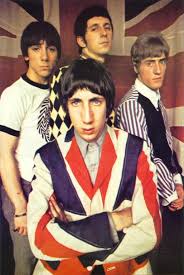
On Sunday, many of us who don’t care much about football will eagerly watch the half-time show, featuring the classic British rock band, The Who—sort of.

The thing is, two of the four members of the band—drummer Keith Moon and bass player John Entwistle—have died. So we basically have half of The Who, Pete Townsend and Roger Daltrey.

Hence the question: is half of The Who still The Who?

Consider: If Paul McCartney and Ringo Starr got together to play (as they have, on occasion) no one would say, “Oh, it’s The Beatles.”

Maybe this indicates that some band members are more important than others. If the remaining half of The Who was Moon and Entwistle, few would think of them as The Who. In other words, maybe there is a kind of “essence” of a band—Lennon and McCartney with The Beatles—and that’s the part that makes it that band. By way of example: Nirvana went through quite a few drummers, and with each, was still Nirvana. But once Kurt Cobain died, the band was unquestionably dead with him.

And so the old Jewish question: Is there a parallel “essence” to Judaism? Clearly there are many variations in Jewish practice: Reform, Conservative, Orthodox, Reconstructionist, Ashkenazi and Sephardi, etc.

Is there a common element that is essential—a Kurt Cobain or Lennon/McCartney of Jewish practice(s)?

Or is essentialist thinking out-dated and obsolete, as some suggest? Maybe The Who are just The Who because they call themselves The Who, and this is just a question of semantics.

What do you think?

Meanwhile, I’m sad the half-time show won’t leave enough time for “Won’t Get Fooled Again”

Monday, February 1, 2010

Two Lifetimes

This coming Shabbat, Yitro, will mark the thirty-sixth anniversary of my Bar Mitzvah.

Thirty-six is a very important number in the Jewish world. An old legend teaches that thirty-six (lamed-vav) righteous people, unbeknownst even to themselves, secretly sustain the world. This is probably related to the fact that thirty six is two times eighteen--and eighteen is the numerical value of chai, or life. In other words, thirty six is the Jewish equivalent, in a sense, of two lifetimes.

And that's pretty much how it feels on this anniversary. February 9, 1974 seems like lifetimes ago. The country was enmeshed in the Watergate scandal; just a few months later, Richard Nixon would become the only president to resign the office. This was certainly very much in the air in our suburban DC synagogue, comprised primary of government workers. It was also on the pop radio stations; I remember singing along with the hit song of the season, Lynyrd Skynyrd's Sweet Home Alabama, with the line: "Now Watergate does not bother me. Does your conscience bother you? Tell the truth." And in those days, before we learned the truth of global warming, the blizzard that swept the east coast on my Bar Mitzvah weekend was just another bit of typical winter weather, and no problem at all for my well-acclimatized extended family from Buffalo, New York.

So much has changed over four decades, including in the Jewish world. Israel has gone from being a beloved underdog to the world's punching bag. Intermarriage, still fairly rare and the subject of scandal in my boyhood, has become the norm outside the Orthodox world. Spirituality has replaced ethnicity and a sense of Jewish obligation (and its partner, guilt) has ceased to function as a motivating factor for Jews under fifty or sixty. Feminism has revolutionized many areas of Jewish life. In 1974 there were two female rabbis; today they constitute the majority of most rabbinical classes in the liberal movements. And gay and lesbian Jews have moved from the margins into the mainstream.

Of course Jews of all political and religious stripes and approaches debate the significance of these changes. We can--and do--tend to express our opinions about what we like and what we don't. But we should not lose sight of the fact that whether we like them or not, these changes are real and enduring.

And not surprisingly, the Jewish world has lagged behind on its responses to these changes. We stubbornly hold on to obsolete approaches to membership, schooling and community. We act, in many ways, as if it were still 1974. We are selling albums in an age of i-pods.

Needless to say, there is also much that remains the same. For my portion, I read the Ten Commandments. And I think it is safe to say that we still disparage stealing, murder, adultery, and coveting (though now, as then, our disparagement has not stopped us from committing plenty of those sins.) I'm not sure about bearing false witness; just five minutes of listening to folks like Rush Limbaugh and Glenn Beck on the conservative talk radio circuit make it clear that this seems to have become the acceptable norm, at least among a certain political subset. Keeping Shabbat as a sacred day, set apart, was difficult then and remains difficult--and worthwhile--now.

But the world is changing, as it always has.

If we do not change and grow with it, we condemn ourselves to fossilization.

Wednesday, January 13, 2010

My Back Pages


I spent the weekend in Billings, Montana, as rabbi-in-residence, which was quite serendipitous, because I was a student rabbi there from 1985-1987. That was my first taste of living in the "real West" and I doubt if I would have come to Boise without having had that Montana experience . My time in Billings really "launched" me as a young rabbi-to-be.

Well, returning after a quarter century was much like going to a reunion. I saw lots of familiar faces: how had we all aged so much over the years? One congregant, Liz Barnea, gave me a picture taken at her daughter's baby naming. We were all so young: shining faces, full heads of hair. When I looked up from the picture, wistfully, Liz went on to introduce me to her daughter, Avital--the baby in the picture, now a beautiful 24-year-old grad student. When we live our lives day to day, aging happens so gradually. And then a blast from the past like this reveals the true passing of time. It's a bit of a shock, and makes one want to really value each moment, cliche as that may be.

I have to share one story from the weekend, which was a real highlight for me. On Saturday night, after havdallah, I did a program on Jews and Jewish influences in American rock music. A lot of my focus in this learning is on Bob Dylan, who is the all-time preeminent Jewish rock artist and a personal favorite, almost to the point of idolatry.

As I went on and on about Dylan, a congregant interrupted to tell me that one Billings resident grew up with Dylan's family in his home town of Hibbing, Minnesota. Her family was very active in the synagogue there. So when that small Conservative shul closed up shop a few years ago, this Billings resident asked if they would donate their Torah to Beth Aaron, the synagogue here. They agreed to do so--and as result, it turns out, I read Torah last Shabbat from the same scroll that Bob Dylan (then Robert Zimmerman) used on his Bar Mitzvah! If only I had known before hand, I could have chanted in the proper nasal tone. . .

Ah, but I was so much older then. . . I'm younger than that now.

Friday, January 1, 2010

War and Its Discontents (Idaho Statesman Column for January)

As this new year begins, we are once again sending tens of thousands of our fellow countrymen and women into the line of fire. Over the last twelve months, the Obama administration has presided over some significant political changes, but with their decision to escalate the war in Afghanistan, sadly, the song remains much the same. One thing is certain: even under the best of circumstances, their decision will exact a heavy toll of death and destruction on all sides. Can this terrible cost be justified?

As I wrote seven years ago, before the Iraq war, I am not a pacifist. Jewish tradition abhors bloodshed, but also recognizes that in some exceptional situations, military force is required. In other words, we see war as a horrific evil but also, on occasion, a tragically necessary one. For absolute pacifists, who view all conflict as unjustifiable, the morality of war is clear cut; for the rest of us, it can be painfully complex. How do we determine if any given military action is a just one?

It helps if one trusts the leaders making these life and death decisions, and I have a great deal more faith in this administration than its predecessor. President Obama seems to have deliberated carefully, consulting with advisors on all sides of the issue. His strategy also has the virtue of a well-defined exit plan.

And yet, in the end, I remain unconvinced of the wisdom of Obama’s decision, for just like George Bush, he is committing us to war without a corresponding call for national sacrifice. When President Bush launched the “War on Terror,” his words to those of us on the home front largely boiled down to, “Keep shopping.” President Obama has been more eloquent, but substantively, he has done little better. Like his predecessor, he is asking for everything from our servicemen and women and their families, and nothing from the rest of the populace. This constitutes a form of moral cowardice, for it allows most of us to avert our eyes from the conflict, pretending that all is well even as Americans and Afghanis lie dying overseas and we squander our children and grandchildren’s financial future on military hardware.

One could argue that President Obama is demonstrating political savvy here, recognizing that the American public has no stomach for the kind of real sacrifices that war should compel, such as a universal draft and significant tax increases. To even suggest such measures today would be disastrous to the administration’s governing coalition.

To which I would respond: If this is true—and I believe it is—then the citizenry’s unwillingness to face up to and pay the true cost of the conflict only lays bare its fundamental inadvisability. If a war, and the leaders who chose to engage in it, cannot summon from the American people a true spirit of national sacrifice, then I suggest that it is, by definition, a battle in which we have no business engaging.

Sunday, December 13, 2009

Home and Chanukah


I'm home after a restful and renewing week at the Monastery of Christ in the Desert.

It was a great opportunity to do some meditation, some writing, walking, teaching and learning. Above all, I focused on strengthening my prayer practice. It's always tempting--and too easy--to run through the liturgy without paying much attention on the kavvannah, the real spirit or intention of the prayers. Using Rabbi Jeff Roth's book, Jewish Meditation Practices for Everyday Life, I created a kind of path through the morning shacharit service that was fruitful for me over the course of the retreat. My challenge now, of course, is to stick with this now that I am home.

Meanwhile, a happy Chanukah to all. May this season bring light in a time of darkness, and renewal and hope and peace.