Sunday, April 10, 2022

Pesach: Affliction and Liberation

I am fascinated by contronyms—words that are both synonyms and homonyms.  By way of example, the phrase “to dust” can mean either to sprinkle with fine particles—think, “a dusting of snow”—or to remove such particles.  An “apology” can be both an admission of guilt or a defense of one’s actions.  And to “cleave” is either to join closely or to split apart.  There’s something fascinating about a word that contains such opposing understandings.

Symbolically, matzah—the central symbol of the forthcoming holiday of Pesach—is also a kind of contronym.  In Exodus 12:39, Torah teaches that we eat matzah because, upon leaving Egypt, our ancestors moved so hastily they did not have time for their dough to rise.  Yet, in fact, those same ancestors actually consumed matzah before leaving Egypt, on the night of the Passover itself, at the first seder (see Exodus 12:8).   In other words, matzah represents both slavery and freedom.  We affirm this duality at our own seders, where we describe the matzah as both lachma anya—the bread of affliction—and the symbol of our liberation.

This paradox serves as a reminder that life is complicated.  As F. Scott Fitzgerald famously noted, “The test of a first-rate intelligence is the ability to hold two opposing ideas in mind at the same time and still retain the ability to function. One should, for example, be able to see that things are hopeless yet be determined to make them otherwise.”

As we approach Passover, known by our tradition as z’man cheyruteynu, the season of our liberation, we feel this challenge intensely.  News services, social media, and often our own life experiences constantly remind us that the world is filled with brokenness, injustice, brutality and pain.  Yet spring calls us to hope, nonetheless—which compels us to do our small but significant part to bring healing. May we soon experience our bread of affliction as a feast of freedom.

Chag samayach v’kasher—a joyous and kosher celebration.  

Conversation Question:

What experiences of affliction and hope will you bring to this year’s seder?


Saturday, February 26, 2022

Portion Pekudey: From Servitude to Service

Superficially, Exodus ends much as it begins, with the Israelites collectively toiling to build a magnificent structure at someone else’s behest.  At the start, we are slaves, constructing garrison cities for Pharaoh.  As the book concludes, with this week’s portion, Pekude, we work to build the mishkan, a portable sanctuary for the God who liberated us.

This shift happens in less than six months.  What difference does that time make?  What is the distinction between being a slave to Pharaoh and a servant of God?  What is the point of the Exodus journey if we end up laboring in the construction business either way?

Rabbi Shai Held notes: “As slaves in Egypt, the Israelites work without respite against their will.  When they build the mishkan in this week's parashah, in stark contrast, Moses asks for voluntary contributions.  Finally freed from slavery, the Israelites are slowly being taught that there is a form of service radically different from slavery, one that honors and nurtures one's sense of agency rather than degrading it and whittling it away.”

What differentiates divine service from slavery?  Mostly, Shabbat. It is no coincidence that when Moses lays out instructions for how to build the tabernacle, he begins with Shabbat: "On six days work may be done, but on the seventh day you shall have a sabbath of complete rest holy to the Lord..." (35:2).  In Torah, both meaningful work and restorative rest are each made holy by the presence and possibility of the other.  Without rest, even the holiest labor eventually becomes drudgery.  And without significant work, even sacred rest settles into boredom.  Just as in music, we need both notes and rests to create a beautiful score, a well-lived life is defined by both purposeful labor and the regular pauses that differentiate service from servitude.

As we conclude Exodus and begin the book of Leviticus next week, let us mark the passage with the words of our tradition for just this occasion: Chazak, chazak, v’nitchazek—Let us be strong, let us be strong, and let us strengthen one another.

Conversation Question:  

How is your balance of work and rest, of sacred labor and holy renewal?  What might you consider adjusting this week?


Saturday, February 19, 2022

Portion Vayakhel: The Restorative Power of Shabbat

The bulk of this week’s Torah portion elaborates on the theme that dominates the last third of the book of Exodus—the building of the portable sanctuary, with its vessels and vestments.  Yet before it takes a deep dive into the details of this ancient construction project, Vayakhel opens with an injunction to observe Shabbat: On six days, work may be done, but on the seventh day, you shall have a sabbath of complete rest, holy to the Eternal One.

Why does a portion so focused on sacred labor begin with a reminder to rest?

Torah recognizes that it is all too easy to get so caught up in our work that we lose perspective on what really matters most—family, friends, relationships.  If the Holy One tells us to rest even in the midst of building a dwelling place for the Divine, all the more so should this apply in our ordinary occupations and projects.  If God’s designated architect, Bezalel can take a break, surely so can most of us.

South Africa’s Chief Rabbi Warren Goldstein writes beautifully about the importance of Shabbat in our frantically-paced world, so full of distractions: 

There’s an amazing passage in the Talmud that says when we rush around during the week, we lose part of our eyesight, which is then restored on Friday night when we gaze at the Shabbat candles.  Obviously, it’s not that our physical eyesight is impaired then restored.  It’s that when we slow things down, we can see more clearly, we have more perspective on our lives, we notice the people around us, and we are able to truly connect to them in the most profound way.  We also reconnect with ourselves. . . The beauty of Shabbat is that it allows us to savor life’s basic pleasures; the simple joys of hearty eating and sound sleeping, of nice clothes and good company, of walking and talking and connecting. We can only fully appreciate these when we slow things down.

Conversation Question:   This coming Shabbat, choose one small thing that you can do to more fully celebrate the day as one of rest and renewal.  Try it.  How does it feel?


Sunday, February 6, 2022

Portion Tetzaveh: When the Heart Delights--For Others and Ourselves


Aaron shall bear the names of the children of Israel in the breastplate of judgment over his heart when he goes into the holy place, for a remembrance of the Holy One at all times.   (Exodus 28:29)

This week’s Torah portion, Tetzaveh, offers a detailed description of the garments worn by Aaron, his sons, and their descendants, the priestly class known as cohanim.  Among those vestments, much attention is devoted to the breastplate, an elaborate ornament bearing twelve precious stones, one for each of the twelve tribes of Israel.  While the breastplate is no longer worn by Jewish leaders, it prominently adorns our Torah scrolls.  

Why does Torah specify that High Priest wear this garment over his heart?  

Rabbi Shimon bar Yochai connects this commandment with another passage that refers significantly to Aaron’s heart.  He notes that when God first calls Moses at the Burning Bush, Moses responds by asking that his brother, Aaron, stand by his side as his spokesperson.  God grants this request and tells Moses: Now he is setting out to meet you, and he will be happy in his heart to see you.

Weaving these two passages together, Shimon bar Yochai teaches: The heart that was happy for his brother’s important role, will ultimately be happy in his own role as the priest bearing the breastplate.

In other words, a significant step toward finding meaning and happiness in our own lives entails learning to rejoice in the gifts and accomplishments of others, especially those dearest to us.  Because Aaron generously celebrates Moses’s leadership, he is able to thrive in his own.

Conversation Question:  This week, focus on rejoicing in the gifts of those around you—and reflect on how this practice helps you to be more generous and comfortable sharing yours.


Sunday, January 30, 2022

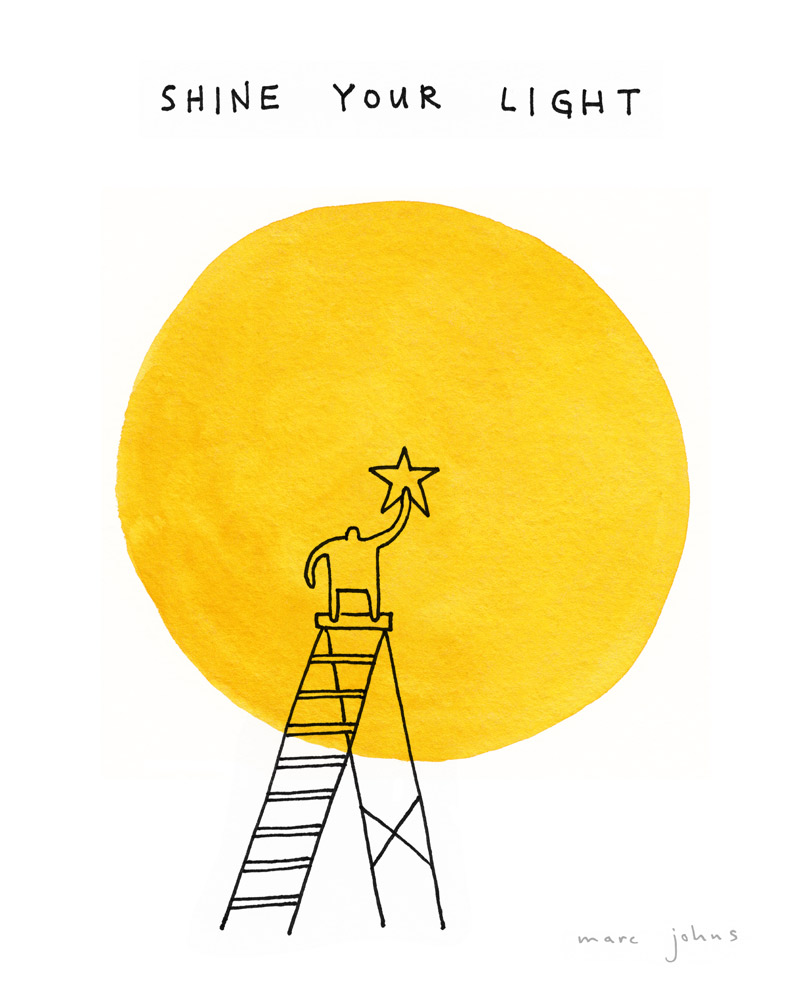
Portion Terumah: Shine Your Light


Our Jewish tradition calls us to raise up both our world and our selves by casting light into dark places.

This week’s Torah portion begins with God’s command to Moses and the Israelites: “Bring me an offering—let every person whose heart moves them make an offering to me.”  The Hebrew word for “offering”—terumah—which gives the portion its name, literally means “uplifting.”  Thus the interpretation of this verse by the Hasidic commentary No’am Elimelech: “Strive to enjoy the light of My divine presence in your life. . . This verse tells you to draw the Blessed Creator to you and rejoice in the Divine Presence.”

This sacred calling can push us into difficult places, both within and without.  For instance, the Talmudic sages once debated whether or not Jews should be permitted to attend the Roman gladiatorial games, which were brutally violent and rife with gratuitous carnage.  Rabbi Meir understandably forbid it, arguing that one who goes to the stadium to watch was complicit in the bloodshed.  But Rabbi Natan argued that Jews could attend—in order to cry out for mercy and potentially save someone.

Rabbi Natan believed it a mistake to pretend that we could above the fray.  For him, our challenge is to step down into the darkness and add to the light that might lift it away.  He asks us to engage in the world, with all of its ugliness, for we cannot possibly help to heal it from a pure but aloof distance.

Right now, the world can feel pretty dark: anger, division, fear, rising antisemitism and, of course, two years of pandemic that continues to drag on, leaving us lonely and weary to the bone.  It is tempting to just tune it all out and retreat into our own fortresses of solitude.  

But our Jewish calling is to engage, despite everything, to find ways to raise one another up, to cast our light into the darkness and help illuminate the way, for ourselves and for our neighbors.

In this month of Adar, the Talmud commands us to rejoice.  The Psalmist declares: “Ivdu Adonai b’simchah—serve the Holy One with gladness.”  This is our collective challenge.

Conversation Question:

This week, can you find one thing, each day, that is a source of joy?  Write it down, or share it with a friend or family member.


Sunday, January 23, 2022

Portion Mishpatim: After the Ecstasy, the Laundry


These are the rules that you shall set before them. . .   (Exodus 21:1)

We all know that after the honeymoon comes the marriage, after the election comes the hard task of governance.  In spiritual life it is the same: After the ecstasy comes the laundry.  (Jack Kornfield)

At first glance, our Torah portion, Mishpatim, is the epitome of anti-climax.  Last week, we marveled at the drama of hearing God’s voice at Mount Sinai.  This Shabbat. . . paragraph after paragraph of the fine points of biblical tort law.  We move from transcendent ideals to legal intricacies, from extraordinary spiritual drama to quotidian banality.

And yet, in some ways, the details of Mishpatim speak more truly to what defines the vast preponderance of our lifetimes.  We all experience peak moments when the adrenaline rush sweeps us away.  These can occur in either triumphant or tragic times, but they are almost always intensely spiritual experiences that, as they are happening, feel profoundly life-changing.   Upon surviving a heart attack or having a baby, we swear our lives will never be the same and vow that from that point on, we will do things differently, get our priorities straight, give our focused attention to what really matters most.  Sometimes we stay the course—but more often, after a bit of time passes, we lapse back into our old ways.  We make our resolutions sincerely—yet we struggle when the peak moments recede into memory.  

Jack Kornfield describes this experience beautifully in his book, After the Ecstasy, the Laundry:

Cycles of awakening and openness are followed by periods of fear and contraction. Times of profound peace and newfound love are often overtaken by periods of loss, by closing up, fear, or the discovery of betrayal, only to be followed again by equanimity or joy. In mysterious ways the heart reveals itself to be like a flower that opens and closes. This is our nature.

Enlightenment is only the beginning, is only a step of the journey. You can't cling to that as a new identity or you're in immediate trouble. You have to get back down into the messy business of life, to engage with life for years afterward. Only then can you integrate what you have learned. Only then can you learn perfect trust.

That’s where Mishpatim begins.  It is all about the rest of the journey, what happens in the days, weeks, months, and years after enlightenment: laws on marriage, employment, lost property, and finance.  We go, in short, from the awesome to the ordinary—as indeed, we always must.  Weddings and births are big occasions, but the real work lies in sustaining marriages and raising children, and it is done through thousands of little ordinary choices and small feats of endurance.  God is truly in the details.  We ignore them at our peril.

Conversation Question:  Consider one small but significant area or action in your daily routine where you might consciously be more mindful this week.  Practice that mindfulness. 


Sunday, January 9, 2022

Beshallach: Stuck at the Edge of the Sea (inspired by Rabbi Yael Shy's commentary)


As this week’s portion Beshallach opens, we stand at the edge of Red Sea, with Pharaoh’s army closing in from our rear flank. We’re terrified, with no place to go.  Completely stuck, paralyzed by what Avivah Zornberg calls radical doubt, bitterly bemoaning Moses: Is it because there are no graves in Egypt that you have taken us to die in the desert?  

This is a classic response to incapacitating fear—our panic leads to anger, blame (sometimes of ourselves, sometimes of others) and a reactionary desire to turn backwards—even when that is not a real option.
We might, then, learn from Moses’s response, as he radically reframes the situation: Don’t be afraid!  Stand firm, for with patience you will witness God’s liberation. The manner in which you now see the Egyptians will shift; you will not experience them this way for eternity.  The Eternal will fight for you, but you shall remain silent.

In this fraught moment, Moses reminds the people that life is dynamic. In doing so, he offers a new perspective—a widening of vision and scope that is the direct antidote to their distress. As Zornberg writes, fear is born of a way of seeing; a changed way of seeing will change their feeling and thinking. 

So, too, in our own most anxious times.  Our challenge is to find ways to still our minds and bodies, to resist panic and despair. We must learn to trust that the distorted and fearful views that grip us in our seasons of pain and struggle are, in fact, fleeting. We have to stay in the not-knowing longer than is comfortable in order to allow our path to emerge.

Conversation Questions
At what point in the journey out of narrowness and into freedom do you currently you find yourself?  How can you shift your perspective in ways that will enable you to navigate that journey successfully?