Monday, October 3, 2011

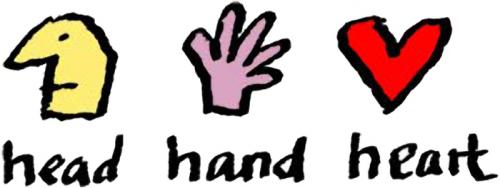
The Head, the Hand, and the Heart


RH Morning 5772: The Head, the Hand, and the Heart

Over the course of my lifetime, I have attended a lot of graduations. As a student myself, then as a brother, a rabbi, a friend and a parent, I have listened to countless commencement addresses offered by a host of local dignitaries. Yet truth be told, with one exception, I can not remember a single significant detail from any of them. All of these speeches have been forgettable, including a couple that I only vaguely recall delivering myself. Graduation talks tend to offer tedious, clichéd formalities that only serve to delay the main event.

But oh, that one exception! I have contemplated it often since I first heard it almost fifteen years ago, and I continue to glean new insights every time I return to its wisdom.

Neither the school nor the speaker was famous. The speech got no coverage on CNN or NPR, or for that matter, Boise’s News Channel Seven. Although certainly deserving, it is not included in any anthologies of “Best Commencement Addresses of 1997.” Mine was the only Jewish family present for the event, and yet the words that defined it might have been drawn straight out of Jewish tradition—even though their author was Basque. The speaker was Miss Patti, the occasion: my daughter Tanya’s kindergarten graduation from Montessori House for Children. And her talk was entitled, “The Head, The Heart, and the Hand.”

With simple eloquence that masterfully moved both the six year olds and their proud parents, siblings, and grandparents, Miss Patti challenged us all to live well-balanced lives. She drew on Maria Montessori’s philosophy of education, with its holistic blend of intellect, emotion, and action.

“Use your heads,” she urged. Reflect on your past experience, plan for the future, develop self-awareness. Think about your choices and their consequences. This is the way we change and grow.

“Cherish your hearts,” she added. Cultivate kindness and compassion. Nurture your spirit. Acknowledge your full range of feelings and emotions. This is how we open ourselves to one another, and to the countless gifts the world offers every day, if we are receptive to its love and generous in returning it.

“And put your hands to work,” she concluded. Translate your thoughts and feelings and words into positive actions. Make a difference. Be quick to help others. Repair what is broken. Fix what is unfair. Create beauty.

That is why we are here and how we should live: by head and heart and hand.

I recall this speech every year when we chant Unetaneh Tokef, the prayer that is, perhaps, most emblematic of these Days of Awe. Little did Miss Patti know that her advice to her young charges and their families would always carry, for me, echoes of the most shattering, death-haunted poetry of the High Holy Day liturgy.

We’ve heard the terrifying and transformative words of Unetaneh Tokef earlier this morning. Were you paying attention? Their thunderous, raw language sounds a most disturbing wake up call:

Let us proclaim the sacred power of this day, for it is full of awe and dread. . .

You are Judge and Arbiter—You open the Book of Life and we pass like sheep beneath Your staff. . . as You consider and calculate, record and recount our every deed. . . and in so doing, decree the fate of every living thing:

Who shall live and who shall die. . .

Who by fire and who by water. . .

Who by hunger and who by thirst. . .

Who by strangling and who by stoning,. . .

Who will be tranquil and who will be troubled. . .

This chilling litany marks the chasm between Divine power and human frailty. It is, of course, metaphorical. God is not really a shepherd, we are not sheep, and the Book of Life is, as we would say, a virtual one. But the imagery relentlessly drives home the poet’s point: our lives are utterly fragile, and our fates are largely determined by forces infinitely greater than our selves.

And then comes the kicker, the phrase upon which the entire poem pivots:

“U-teshuvah, u-tefillah, u-tzedakah ma’avirin et ro-ah ha-g’zerah”

Repentance, prayer and charity temper the severity of the decree.

What does this line mean? What does it come to teach us?

One could take it as a promise of Divine reward for good behavior. According to this interpretation, sincere repentance, heartfelt prayer, and generous giving essentially buy us life, health, and prosperity. In other words, if we are virtuous enough, God will judge us favorably, enabling us to avert the decree for another year.

But such a reading does not hold.

To begin with, it is obvious that no one escapes the final judgment. No matter how radically we repent, how truly we pray, and how munificently we give, we will all perish. Pain and sorrow afflict every one of us; the only question is not “if” but how and when. The decree is irrevocable, issued, signed, and sealed at birth. And, alas, it is often anything but fair. Over the course of this new year, 5772, some of us will fall sick, many will endure difficult losses, and a few of us will die. That is not divine punishment; it is the way of flesh and blood.

To put it in the bluntest of terms: almost nothing we do, for good or for evil, will change the decree. There is no simple correlation between morality and mortality. To insist that doing mitzvot will assure long life and abundance—or that sinning will bring distress and death—is to deceive oneself. As the poet Mary Oliver puts it:

Above the modest house and the palace—the same darkness.

Above the evil man and the just, the same stars.

Above the child who will recover and the child who will

not recover, the same energies roll forward,

from one tragedy to the next and from one foolishness to the next.

Even worse, the illusory calculus of divine reward and punishment insinuates that those who suffer are themselves to blame for their unfortunate fate. The notion that God dishes out blessing and retribution according to our merits is therefore shortsighted at best, and, at worst, insulting. Our destinies are much more complicated, mysterious, and paradoxical than can be expressed in such falsely pious formulas. By any reasonable human reckoning, life is not fair—and while, repentance, prayer and charity are certainly virtues, they do not alter that fundamental reality.

Of course we are not the first generation to recognize this inequity. Life’s unfairness is not exactly breaking news. Our Talmudic sages lived in times and places steeped in much more death and disaster than our own. Women routinely died in childbirth. Many children never reached adulthood. Plague and pestilence decimated communities. Rabbis were tortured and killed for the crime of teaching Torah. And so our Sages struggled, at least as much as we do, to make sense of a world in which inexplicable afflictions strike down virtuous women, men, and children, while the depraved and merciless escaped unscathed.

The history of the Unetaneh Tokef prayer reflects the Rabbis’ wrestling with this age-old quandary. Five hundred years before Amnon of Mayence is said to have composed the words that we recited this morning, the Jerusalem Talmud offered an earlier version teaching that “repentance, prayer, and charity m’vatlin—abrogate or tear up—the decree.” But this first draft did not make the cut. Our revision shifts the verb from m’vatlin to ma’avirin—from abrogate to mitigate. This modification changes everything. With it, the Rabbis reject the illusion that doing good ensures a long and happy life. They concede: the decree stands, regardless of the merit of our deeds.

And yet. . . our deeds matter. While our choices cannot shield us from sorrow, they can temper our suffering and ease our passage. Repentance, prayer and charity won’t cure a disease or restore a loved one but they may attract people who console us in our grief, and thereby restore a sense of community, meaning, and peace. Nothing can stave away sadness and loss—but we can all find purpose and possibility in the portion that, for better and for worse, is ours. In the end, we cannot change the decree. But we retain the power to choose life and blessing in the days allotted us.

In other words, Unetaneh Tokef reminds us, oftentimes we do not create our circumstances. But we decide how to respond to them—and the choices that we make define who we are and what we will become.

Who shall live and who shall die? Each and every one of us. The challenge is to make the most of the unknown parcel of precious time we are allotted, to live each fleeting hour with awareness, intention, and integrity. For in truth, some people are as good as gone even as they go through the motions of walking this earth, while others remain vitally alive even while confined to their deathbeds. The wisdom of Unetaneh Tokef cannot rescue us from illness or death, but it can teach us to number our days, and live well—lest we die spiritually while we are still here.

Which brings me back to Miss Patti and her sage advice to the young graduates of Montessori House for Children. Although she did not know it, her categories of head, heart, and hand correspond beautifully to teshuvah, tefillah, and tzedakah, the three activities that ease the decree’s severity.

Teshuvah is all about the head. It is the way of self-awareness, the radical notion that by focusing mind and will, we can improve ourselves, rise above our faults, and amend our failings. In the words of Rabbi Sharon Brous, teshuvah is the promise that: “You don’t have to be a static, stagnant being, dwelling in the mistakes of years past. You can affirm that life is dynamic and people change.” The process begins with a serious spiritual accounting, in which we weigh the consequences of our choices, good and bad. From there, we ask forgiveness from those we have hurt and grant it to those who have hurt us. And then comes hardest part of all: mustering and maintaining the mental discipline to stay on course from this new year to the next. It is difficult and demanding work, but the reward is great—for if we wish to be truly alive until we die, we must use our heads, to make teshuvah, to live the carefully and constantly examined life, to apply God’s gift of conscience and mind, to question, reflect, hope, and grow.

Tefillah is the language of the heart. It is the path of compassion and kindness, the power of emotion that gives the spirit wings. The truest prayer is our awe-filled silence when the world’s beauty takes our breath away. Tefillah is all that makes us sing and soar: candles, music, meditation, art, nature, relationship. It is about living and embracing mystery, about moving forward on faith when we are weary and cannot otherwise discern the way. Whenever we truly open our hearts, what they utter is a kind of prayer. Tefillah is the love that conquers loneliness; it is the heart’s miraculous capacity to both give and receive the comfort of community as we reach toward God and one another. This, too, is difficult work, and risky, for whenever we extend our hearts, we risk having them broken. But again, the reward is great—for if we wish to be truly alive until we die, we must, indeed, dare to open our hearts, to raise up our tefillah, our prayer, to receive and bless the countless gifts the world extends every day, and lovingly offer ourselves in return.

Tzedakah is the work of the hand. It is ethics in action, the way of renewal and repair. While much in life is inequitable and out of our control, tzedakah reminds us that our hands can make the world a little fairer. For Jews, this is not an option but an obligation. We must share our resources and give of ourselves. Tzedakah means standing hand in hand with our fellow citizens, living lightly on the earth, caring for the environment, fighting oppression, and recognizing that we are our brothers’ and sisters’ keepers. Tzedakah is how we embody our Jewish values in the marketplace of daily life. Let us put our hands to healing, here in our local community, our state and nation, and in Israel, our Jewish homeland. As Talmud teaches, we need not complete the work, but neither are we free to desist from it—for if we wish to be truly alive until we die, we must use our hands, to perform the sacred labor of tzedakah, to fix what is broken and sow seeds of justice and liberation.

On this first morning of the New Year, let us, then, affirm our holy calling, according to both Miss Patti and Rabbi Amnon of Mayence: teshuvah, tefillah and tzedakah, the head, the heart, and the hand. For knowing that we will all die, our challenge is to live fully, here and now, embracing intellect, emotion, and action.

I conclude with the final paragraph of Ian Frazier’s wonderful memoir, Family. As the book draws to a close, he is sitting at his mother’s deathbed. Feeling the weight of her mortality—and his own—he recognizes in that sad and sacred moment what we live for. He writes:

Sooner or later I would die—I understood that now, clearly, the way you suddenly become aware of the sky and the diving board after the person in front of you has jumped—and my kids perhaps would see me off as I had seen my parents off, or perhaps not. And soon all the people who had accompanied me through life would be gone, too, and then even the people who had known us, and no one would remain on earth who had ever seen us, and those descended from us perhaps would know stories about us, perhaps once in a while they would pass by buildings where we had lived and they would mention that we had lived there. And then the stories would fade, and our graves would go untended, and the graves of those who had tended ours would go untended, and no one would guess what it had been like to wake before dawn in our breath-warmed bedrooms as the radiators clanked and our wives and husbands and children slept. And we would move from the nearer regions of the dead who are remembered into the farther regions of the forgotten, and on past those, into a space as white and big as the sky replicated forever. And all that would remain would be the love bravely expressed, and the moment when you danced and your heart danced with you.

Ken y’hi ratzon.

The Rabbi's Tale--Response by Larry Robbins (Rabbi Fink's Uncle)


But this time, the rabbi was not alone. For on that eve of Rosh Hashanah, the sacred day when the world labored to be born anew, she found her entire congregation waiting there for her—young and old, long-time friends and newcomers, women and children and men. She laughed and cried and smiled as they embraced her and she embraced them back. Then, she pointed at the door, held up the glittering keys, and. . .

saw a crowd of congregants, the usual ones—Harry Cohen, Rose Cohen, Irving Miller, Stanley Tedesco, Christine (Tina) Williams—you know them, too. The rabbi gave a key to the first three people and told them to bring them back when they completed their investigation. They returned shortly with nothing except puzzled looks on their faces. Many more people claimed a key; and although most came back empty-handed, a few found something. One person, who emerged from the copper room had a hammer and thumbtacks and a sheaf of pamphlets. A second person emerged from the room of water with a load of law books, and a third came out of the “wilderness” room with a dusty, crumbling map.

The rabbi also saw at the edge of the crowd someone who looked like Elijah, and he had an agitated look on his face as if he were arguing with someone—probably God, with whom he had many contentious moments until the usually benign seer quit being a prophet.

After awhile, with so many people going in and out of the three rooms, the doors were left ajar, and no keys were needed. In and out, room to room. Finally, as the rabbi was observing all these comings out and goings in, she realized that the last person to enter the room of fire was taking a long time. The man was of undistinguishable age and looked steadfast. With the door now mostly open, she could see that the room was almost empty, except for a fireplace with raging flames. There was also a bookshelf with two books, one small and the other larger. Suddenly possessed with acute vision, she saw the man take the first book off the shelf and open it. Inside was only one short message: You don’t know how much time you have left, so get to work. The other larger book had burnt edges and smelled of smoke. In it was an old photograph of a very handsome man, probably in his early thirties, and underneath was a handwritten caption in Russian and English: Dadja Loveh, Uncle Louie, taken in 1899. On the next page was a little story:

Uncle Louie was a revolutionary and used to get arrested from time to time. When he went to jail he used to take his little printing press with him. He made his pamphlets and dropped them out of the back window to his young nephew, who used to (with his mother) wheel a baby carriage from telegraph pole to telegraph pole and have someone nail up a sheet of paper, which always ended with--comes the Revolution.”

After reading the two books, the man gathered them up and left the fire room with a look of resolve.

The rabbi moved closer to the door of the water room as another congregant entered. He, too, was surprised to find an almost bare room with a small book shelf and two books. He opened the first book and found a short, somewhat enigmatic statement: chose life without the threat of death if you don’t. The second book had a picture of a wiry man with a khaki long sleeved shirt and khaki pants holding up a string of about sixty trout. The caption read: Nephew of Uncle Louie, Sam the Wise. On the facing page was the following parable:

According to Maimonides, one of the highest forms of Tzdakah, charity, is the anonymous gift. Sam took his youngest son Lazar to a father-son dinner, once. After the meal and some boring entertainment, the master of ceremonies (another Sam), got up.

"I'll make no bones," he began, "we want to raise money to buy bats and gloves for boys not as fortunate as our wonderful sons." He threw out a figure. Someone called out, "I'll give you five." Another person said, "ten." "Sounds like an auction," Sam said as he got up to "go to the bathroom."

When he came back after about ten minutes, the master of ceremonies stopped his patter. "Ladies and gentleman...actually there are no ladies at a father-son affair, and not all of you are gentlemen, either." A few people laughed. "But there is one gentleman here who just doubled the amount we've raised so far. There'll be plenty of baseball played this summer."

"So who is it?" somebody yelled.

"I'll tell you who it is." The master solicitor paused. "It's...Mister A. Nony Moose."

The seeker in the water room chuckled a little, but he also noticed a sheaf of envelopes tucked into the back of the book. Each contained a solicitation letter from organizations like cancer hospitals or the natural resource council. When he left, he had a look of determination. Actually, he looked a little like Mr. A. Nony Moose.

The rabbi was pleased, but she also noticed a teenager shrinking behind the dwindling crowd. This young person finally gathered the courage to enter the “gold” room. This room had the usual shelf with two books, but the walls were papered with maps. The teenager opened the first small book and saw no picture, only a brief inscription: You are here; where are you going? On the next page was a small map with an X and the repeated statement: You are here, followed by some dotted lines and an arrow that was pointed upwards toward Sinai. The precocious teenager rushed from the “gold” room, the room of exile, to begin the journey from here to there.

By now, no one was left, or so the rabbi thought. But from the back materialized a man whom everyone called Uncle Lazar. He approached the rabbi, gave her a kiss on the cheek (as happens with female rabbis) and then a letter. “Kain Y’Hi Ratzon,” he said and left.

This time the rabbi was truly alone. She opened the letter and found a sheet that said simply:

Dealing with Crises or Life in General

1. Achieve a sense of awe everyday. Look for a baby’s smile or a double rainbow or turning leaves on a mountain. Listen to Dylan or Beethoven or even the sound of silence.

2. Do something for someone else because so many people do something for you. A “pat on the back” is a good start.

3. Learn something new everyday. Don’t wait to be taught; ask questions.

4. Create at least one parable a day. A parable is the mirror of our life.

The rabbi folded the letter and also put the three keys into it. I have become the keeper of the keys, she thought--the keys to the sovereignty of learning, faith and deeds of loving kindness.

The Rabbi's Tale--Response by Gayle Speizer


While all the congregation held hands, (including holding the rabbi's left hand), in apprehensive, but excited expectation, the rabbi took each of the keys and opened all of the locks with her right hand.
The huge door swung open and the group was instantly engulfed among hundreds, if not thousands, of ancient Israelites in the midst of the Red Sea, scurrying along a dry path between the walls of WATER to the other side. While they were being swept along by the throng, they did not notice that their clothing had changed from modern-day apparel to the clothing of the ancient Israelites who were fleeing from Pharoah's army.
By the time those who had entered the door by way of the copper, silver and gold keys, had arrived on the opposite shore of the Red Sea, their memories had also been erased. Their hearts filled with joy as Miriam sang praises to Jehovah for bringing the multitude safely across.
As darkness fell, they were led by a pillar of FIRE through the WILDERNESS, where eventually they would encounter the Ten Commandments and all the rest of the Torah.

The Rabbi's Tale--Responses by Dan Ronfeld, Rebecca Groves and Jack Bonawitz


Dan Ronfeld

So the rabbi, having been given the keys, offers them to the congregation, saying, “Our community has always acted at its highest when we act as a family and whatever decision we make today we will do as a family. Opening this door, we reach a place of milk and honey. A land not given to the troubles of this life. So please, offer up your thoughts.”

The first up was a logical one, the Patriarch of the Congregation. A.K. Markowitz. He spoke up and said, “My father and my mother came to this community wanting the independence the open minded West offered. They were shackled by the constraints of the Lower East. Before that, my grandparents got on boats, barely in their teens with nothing but memories of families they would never see again. Since Abraham we’ve taken up and moved forward. Now with the chance to go into Gan Eden, tell me—what has this world got left for us, that we should stay? I may have an old man’s eyesight, but my vision is clear. Times are bleak. Things are bad. I might not be here too much longer, but the whole of our people isn’t slated to make it into another century. We need to go now while we’re still here to go.”

He was resigned. Soon almost all in one form or another were in agreement. The door, for a variety of reasons, must be opened and the age of wonder let in.

Then from the back there was a noise, all too familiar with the Hebrew School teachers, belonging to Shmoey Abrams- the pisher nightmare of Classroom Gimmel. No shin was safe as he made his way to the rabbi, halting, almost in time, and yelled, “STOP! STOP! Don’t to it.”

The rabbi who was wonderful with children... said “Shmoey, why not?”

“Because the last Harry Potter stunk!”—and they all looked at him… At this point, his parents wished little Shmoey was an orphan. The rabbi, who was also patient, said “Shmoey, I think you are a little off topic”.

“NO,” he looked back ferociously, “when you finish anything it’s bad and when you finish it’s over. Even when you are losing the game, playing is better than stopping. Even when the movie scares you, it’s better than when it’s over. You can’t say it’s over, you can’t call it over. Whatever is there, it can’t matter as much as what is here. How good can another life be, how can it be better than this one? Even when it isn’t great, it’s still really fun.”

The eternal optimism of youth smashed the idol of defeatism. Shmoey’s parents for the first time felt something akin to naches. The game of life isn’t called on account of rain, and if you are alive enough to assess your failures, you are alive enough to keep trying. Jewish history has always been written on the blade of a knife. Apathy is a horrible enemy, but it’s not pogroms. Intermarriage is a tough conversation, but it’s not Kristallnacht. Whatever, the congregation decided, an afterlife might hold, it would have to wait- and this life must be engaged. We may not have any solutions—but they are ours to find, and as long as we exist, we have time to find them.

The rabbi looked at her congregation. The Abrams and the Markowitzes, yes, but also interfaith families, gay families, childless and adoptive families, families made up of individuals not born Jewish. It’s not a shrinking circle, it’s a broadening one. Her job was to embrace that change. Not force it into the mold of an antiquated template, but assess and evaluate the new opportunities that a 21st Century Judaism offers. One with Chinese 5 spice in the Chicken soup. A seder table with a new illustration on our struggle for freedom.

So she took the keys, put them in a box, and wrapped it up, to be stored in the attic of the temple under a large forgotten crate marked “Golem.” One day, she told herself, she would have to open that and see whatever could be inside...

**********

Becky Groves

But this time, the rabbi was not alone. For on that eve of Rosh Hashanah, the sacred day when the world labored to be born anew, she found her entire congregation waiting there for her—young and old, long-time friends and newcomers, women and children and men. She laughed and cried and smiled as they embraced her and she embraced them back. Then, she pointed at the door, held up the glittering keys, and said, “ You will remember not long ago we celebrated Shabbat and I spoke to you of the Torah portion, Ki Tavo, which means “when you enter”. I stand before you today as we are about to enter a new beginning. This door holds behind it the promise of what will be, but I cannot open it alone, I need your help.

Before the Rabbi had finished speaking a young man from the congregation jumped up. He burned with a desire to right the injustices of the world. His whole body was ablaze as he snatched the copper key from the Rabbi's hand, confident that his passion was all that was needed to unlock the great door.

Next, an older congregant rooted in tradition came forward. He was sure that the steady flow that had always led him on his way was the only true way. The cool, calmness of knowing that the current was the same today as it had been yesterday and would be the same tomorrow guided him forward as he deliberately reached for the silver key.

After some time passed and no one else came forward the Rabbi walked to the back of the room and handed the remaining key to a quiet woman who looked confused and unsure as she hesitantly took the gold key in her hand.

Each one tried their key in the lock. The copper key in the copper lock, the silver key in the silver lock, and the gold key in the gold lock, but the door would not open.

Then they tried them together, each one putting their key in the locks simultaneously, but the door still would not open.

Just when the congregation was losing hope, a small child stepped forward and the face of Elijah was in the face of the child as she spoke to the three holding the keys.

“Why don't you switch keys” she suggested, “Embrace what the other has to offer. It is only when you accept the other that the door will be opened to you.”

The quiet woman timidly reached for the copper key and her confusion became conviction.The young man grabbed the silver key and his fiery passion cooled to a calm contentment.

The older man smugly scooped up the gold key, confident in his beliefs, only to find that he was filled with the blessing of doubts.

These three then joined hands and each with the key of the other firmly in their grasp they went to door and inserted the keys into the locks.

It was only then that the door swung open and they heard these words:

“All Jews are responsible, one for the other. Ki Tavo, when you enter, you enter as one.”

**********

Jack Bonawitz

But this time, the rabbi was not alone. For on that eve of Rosh Hashanah, the sacred day when the world labored to be born anew, she found her entire congregation waiting there for her—young and old, long-time friends and newcomers, women and children and men. She laughed and cried and smiled as they embraced her and she embraced them back. Then, she pointed at the door, held up the glittering keys, and paused. She could see that they were waiting for her to open the three locks and reveal so much to them. The rabbi imagined that her congregants saw her as the Israelites saw Moses.

What happened next surprised everyone, the rabbi included, for she took each of the keys as one would take a Frisbee and sailed it with all her might as far as she could. She saw each of the keys sail through the air, almost in slow motion, and each one landed in a deep pool of muddy water where it quickly sank out of sight.

When the last of the keys was gone, she was as astonished as anyone in the congregation. She hadn’t planned to throw them away; it just seemed to happen. Had someone asked her what she was going to do or why she was going to do it, she wouldn’t have known what to say. Her actions were more like instinctive reactions to danger—like swatting at a wasp flying into one’s face.

And when her gaze turned back to her congregation, she saw a range of emotions: some were confused at what she had done; some were disappointed at the loss of the keys; and some were openly angry at her actions.

Now, at this point you’re probably wondering how this is all going to work out since the Erev Rosh HaShonah service was supposed to begin in just a few short hours. So I will tell you—I don’t know.

An old Litvak, known for his keen mind and vivid imagination, said that the congregation met within the hour to decide the rabbi’s future. The president, a hard-nosed businessman known more for thin budgets and short meetings, had wanted to fire the rabbi on the spot. The rest of the Board decided that a congregational meeting would be the best forum for uncovering the truth. No email or phone tree was necessary—everyone even remotely connected to the congregation wanted to be there to see what would happen.

The congregation’s sanctuary, which would normally seat one hundred, was packed for the meeting. In fact, many noticed with some irony that more people were there than ever attended High Holy Days services.

Promptly at the set time, nothing happened. Finally, almost twenty minutes later, the president arrived with a cup of coffee in one hand and a sheaf of papers in the other. He quickly called the meeting to order, and turned it over to his son, a young man whose sole accomplishment was being the only child of a wealthy man. The son strode to the reading stand, looked around the sanctuary at the congregation, cleared his throat, and began: “Ladies and gentlemen,” he said somewhat pompously, “allow me to set forth the facts in this case. Our rabbi had in her possession today three keys which would have allowed the members of this congregation to become what we all aspire to—pious Jews.” At this point, the Litvak said, more than a few knowing looks were exchanged since the young man rarely attended services, and he once asked at Passover when they would sing his favorite song, Kol Nidre. The congregation, however, seemed willing to allow him to make a point or to find one, but they were already beginning to look at their watches. He continued, “Given the power to guide this congregation, our rabbi knowingly, willingly, and”—he searched here for another adverb—“uh, haphazardly discarded three keys to the doors of…of…”—by now everyone could see that he was as prepared as Noah’s neighbors.

The president, seated on the bimah, quietly said, “Hymie, sit down.”

“I’m not done,” the young man said stridently.

“Sit, Hymie,” his father said, “sit.” And with that the father strode to the reading stand while the young man slipped quietly into a pew next to his mother who patted his hand and offered him a Lifesaver.

“Now,” said the older man, “I just want to ask you, Rabbi, why did you throw those keys away?”

Not since her bat mitzvah had the rabbi been so anxious. As she stood to walk to the shtender, she felt light-headed, the way she had felt hours earlier when she threw the keys into the pool. She wondered to herself if she was having an out-of-body experience because she was moving without thinking, looking without seeing.

Grasping the sides of the shtender, she looked out at the congregation, smiled as best she could, and said, “Friends, I apologize if I have hurt you or confused you.” She paused to let this sink in, then she continued. “I could ask you to trust me to do what is right, but I feel like you deserve more of an explanation.” As she looked around the sanctuary, she saw heads nodding, but few smiles.

“Over the past months, I’ve had a series of—well, I don’t know what to call them exactly. In some ways they were dreams, but they weren’t exactly dreams. If I studied kabbalah, I’d say they were mystical experiences. Whatever they were, they were very odd and very powerful. Just as Dante had Vergil to guide him, I had Elijah to guide me.” As these words came from her mouth, she saw looks of confusion on some faces and amusement on others. Sensing their concern, she went on: “I know this isn’t the explanation you expected, but allow me to continue.” She paused, gathered her thoughts, and continued. “In those dreams, when Elijah appeared to me, he showed me a door with three locks on it. Behind the door was Torah and transformation. If I passed three tests, I would get the keys to those locks. The first test was fire, the second water, and the third wilderness. But when I passed all three tests, Elijah said he couldn’t go any further, and he just disappeared. He gave me those three keys you saw, and—poof!—he was gone.” As she said this, she realized how preposterous the whole story sounded. Had someone told her the story, she thought, she would have wondered at his sanity.

Based on the looks on their faces, however, the congregation seemed to believe this story. It was as odd a story as they’d ever heard, but she was, after all, their rabbi, and she had never misled them before.

At this moment, though, she realized that the most important part of the story had yet to be told—why had she thrown away the keys? “So,” the rabbi said, “you’re wondering why—if those keys were so hard to get and so valuable—why did I throw them away? If I could give you that great gift, why didn’t I?” A room full of heads nodded, almost in unison. The rabbi continued, “Well, I’ll tell you. Judaism.” She paused for that to sink in. “Yes, Judaism is about doing, not receiving, not believing. Doing. Think about that. What are some of the important principles of Judaism? Torah (lifelong learning), Avodah (spiritual growth), G’milut Chasadim (acts of loving kindness), Kehilah (community-building) Tsedakah (justice). Each of those principles requires that we do something, not just talk about it or profess to believe in it. We have to do.” She paused, as much to catch her breath as to let this lesson sink in.

After a moment, she continued, “Those keys that some of you were so upset at losing? Well, you did nothing to earn those keys, you never had them in your possession, and you don’t even know what you would have received if I had given them to you. In a way, you’re like Jonah. He tried to avoid his responsibility to do something, then, when he did something, he didn’t understand what he’d done. And we don’t know if he ever—as they say today—got it.”

Feeling more confident, the rabbi paused for a moment then went on, “May I ask you some questions? Do you want your children and grandchildren to be b’nai mitzvah?” Virtually every head nodded. “Good. Do you want your children to be married under a chuppa?” Again, nods all around. “Good. Do you want to be buried in a Jewish cemetery?” Again, nods. “Very good. Now, would you like to see the world be a better place?” There was widespread murmuring in assent. “I thought so,” said the rabbi. “So what will it take to get those things? Magic keys? Or you—each and every one of you—doing what you can to shape the world as it should be.”

Looking at her watch, the rabbi said, “Now, we can begin our Erev Rosh HaShonah prayers, or we can put our faith in magic keys. We can begin transforming ourselves and our world, or we can cross our fingers and hope.”

The old Litvak said that no one even thought about going out to that pond. As a matter of fact, he claimed that the new sanctuary, which was constructed during Hymie’s first term as president, was built where the muddy pond had been.

The Rabbi's Tale


The Rabbi’s Tale—a Parable of Transformation (Rosh Hashanah Eve 5772)

“Our Rabbis teach: There are three paths to Torah—fire, water, and wilderness.”
-Midrash Bamidbar Rabbah

Once upon a time there was a rabbi who loved her community dearly. She had spent most of her adult life there, preaching and teaching, learning and listening, raising her own family and reaching out to those of her congregants. And they returned her love in abundance, treating her with deep respect and unassuming kindness. The rabbi and the congregation had grown up together, mourning losses and celebrating simchas, both personal and communal, sharing and supporting one another through halcyon days and hard times and everything in between. The rabbi was profoundly grateful for the opportunity to serve this small and haimish congregation, and she had come to see her life with them as richly blessed. Now that she was well into middle age, it occurred to her that she would probably serve out her career, retire, and even die there—and somewhat to her surprise, she was at peace with this thought. She recalled the Talmud’s query: “Who is rich? Those who rejoice in their portion.” As she played that teaching over in her head and in her heart, she realized how lucky she was, for her portion brought her a wealth of joy. She smiled and thought to herself, “I am content.”

Still, she had lived long enough to know that this happiness would not last if either she or the community eased off and rested on their laurels. For alongside her enduring gratitude, the rabbi also sensed that her congregation and, indeed, the entire American Jewish community was on the verge of a significant crisis. Like most of her colleagues, she read the Jewish population studies, so she was well aware of their predictions of Reform and Conservative Judaism’s precipitous decline and possible demise through intermarriage, low birthrates, assimilation and apathy. She had never taken these grim reports too seriously, but recently, trends and events in her own congregation made them harder to ignore.

Each fall, for instance, the rabbi noticed more and more empty seats on Rosh Hashanah and Yom Kippur as significant numbers of congregants now opted to go to work and send their children to school rather than taking the days off. This shocked the rabbi, for even though she had grown up in the south among shrimp-loving, Sabbath-working classical Reform Jews, even those otherwise not so pious congregants would never have considered skipping out on the High Holy Days. Apparently the old motivators of guilt and obligation no longer held sway, as more and more Jews opted to stay away from shul even on Kol Nidre.

There were other troubling signs. The religious school was slowly but steadily shrinking. Clearly this was a nationwide problem, as the newly-appointed president-elect of the Union for Reform Judaism was a rabbi best known for his iconoclastic sermon, “The End of Religious School As We Know It.” Like many of her peers, the rabbi was struck by how the American Jewish community could be the wealthiest and best-educated in her people’s long history—and at the same time, the most Jewishly uninformed. She wrestled with how to educate the parents along with their children, rather than continuing the Sunday morning drop-off method that had proven to be such a failure.

The congregation’s budget was tight even in good times—and financially-speaking, these were not good times. And the core of synagogue regulars—a remarkable, devoted crew, to be certain—was growing older. When the rabbi’s own children were young, they accompanied her to synagogue every Friday night, where they happily hung out with their Jewish friends. Now, the community in the pews was getting grayer by the week, so that on the rare occasions when young families would show up with their toddlers and school-age children, they usually found no peers to play with and left with little incentive to return.

Over the past few years, the rabbi had come to see the classic model of synagogue membership as archaic, particularly for people under forty. She once asked the middle-aged members of her board—which is to say, some of her most active and engaged congregants—how many of their children had joined a congregation. Not one person raised a hand. Their sons and daughters—almost all of whom the rabbi had herself Bar and Bat-Mitzvahed—were proud Jews but did not choose to affiliate with synagogues. Instead, they practiced their Judaism a la carte—an activity here, a gathering there—rather than formally and financially committing to a congregation. It seemed to the rabbi that with membership, synagogues were still trying vainly to sell albums in an i-tunes world.

The rabbi was aware of all of these trials, and more: engaging teens and twenty-somethings, supporting the community’s ailing elders, and developing new leadership instead of burning out once-ardent volunteers—all while struggling to stay afloat in the depths of the worst economy since the Great Depression. She found these challenges daunting, and in her darker hours, she worried.

But she did not despair.

Remember, she was, as our story began, happy—in large part because she was, by nature, an intensely hopeful person. She was no Pollyanna; she saw the host of difficulties that lay ahead, for the American Jewish community in general, and her small shul in particular. Yet she also recognized, with strong faith and clarity, her people’s unheralded strengths: a thriving pre-school, the idealistic Jewish pride of the youth, the resilience of her peers, and the hard-earned wisdom of the community’s matriarchs and patriarchs. Her children were fourth-generation American liberal Jews; she refused to believe the naysayers who insisted that they and liberal Judaism had no future.
 

The rabbi had once heard that the Chinese pictogram for “crisis” also means “opportunity.” She liked this convergence; it reminded her that the Hebrew word for “crisis, ” mashber, was even more hopeful, for it means “childbirth chair.” Perhaps that is why the rabbi’s natural reflex was to see tough times as birth pains. Called by her faith to this labor of love, she yearned to lead her community in a fashion worthy of its sacred mission, to help them do their part in delivering the new Jewish world waiting to be born. The rabbi often wondered whether she was up to the task. And so, now mid-way through the journey of her life, she prayed each night that God might somehow show her the way.

**********

And it came to pass at the new moon, on the eve of the month of Tammuz, in the season of the summer solstice, that the rabbi dreamed a dream.

She found herself in an expansive, plain white room, with no windows or furniture or features of any kind, save for one imposing black door barred by three locks made of copper, silver, and gold. She waited there, silent and alone, for what felt like an eternity though it may have been only an instant. Then, from out of nowhere, a messenger arrived in a tattered brown tunic, sporting a long grey beard, and a heavy cedar staff. He smiled sternly at the rabbi, then took her hand and introduced himself as Eliyahu Ha-Navi, Elijah the Prophet.

She met his gaze, bowed low, and said, “Hineni—Here I am. O Messenger from on High, has the Holy One of Blessing heard and hearkened to my prayers? My people and I are your humble servants. Tell me, now, what would you have us do?”

“There are,” replied Elijah, “three roads to Torah. Listen, learn, and live these three paths and you will receive a key for each, in due time. The first approach to Torah and transformation, for yourself and your community, is to travel the trail of fire. Go now, my child, for from this new moon until the next, you must follow the fiery way.”

The rabbi woke flushed and feverish, with the fearful knowledge that her journey had begun. For the entire month of Tammuz, as the moon waxed, then waned, her world was afire. Her nightly dreams were marked by blazing visions and visitations. She beheld burning angels, wheels of fire, brilliant lights and luminaries. And she met the fiery Jewish radicals whose passion for justice and truth had changed the world. Every night they came to her: Abraham the idol-smasher, Deborah the warrior, the prophets Jeremiah and Ezekiel, whose scorching words foretold the fall of kings and empires.

She also met more recent Jewish revolutionaries: Marx and Freud and Einstein, Emma Goldman and Betty Friedan. Ancient and modern, pious and heretical, they came and preached the power of fire, the capacity of blazing words and deeds to alter the course of history.

By day, the rabbi meditated on the meaning of her dreams. She considered the small but significant changes her own community had achieved by way of fire, through change born of passionate activism. She recalled with great appreciation the courage of both the founders of liberal Judaism and the foremothers of Western feminism, without either of whom she would not have had the opportunity to become a rabbi. And having seized that opportunity, she proudly counted the transformations that Jewish feminism had brought over the decades of her rabbinate: the opening of leadership to the long-neglected female fifty percent of the Jewish people, the creation of new liturgies and lifecycle events, and healthier models for both women and men to balance family and career. All around her, the rabbi realized, were the products of progress, born of fire: the movement toward full inclusion for gay and lesbian Jews, the hundreds of thousands of Jewish blogs and websites and other technological tools, and, perhaps most revolutionary and miraculous of all, the creation and success of the young Jewish nation that had risen like a phoenix in the land of Israel after two thousand years of exile.

As Tammuz drew to an end, the rabbi pondered all of these things and thanked both God and her nightly guides for showing her the blessings of the path of fire.

**********

And it came to pass at the next new moon, on the eve of the month of Av, in the season of tears, that the rabbi dreamed another dream.

She stood, again, in the same large room, but now the once-white walls were replaced by ramparts of raging flames. Then Elijah appeared from out of the blaze and handed her a burnished copper key. “You have done well,” he said, “traveling the road of fire. The second approach to Torah and transformation takes up the trail of water. Go now, my child, for from this full moon until the next, you must follow the way of water.”

The rabbi woke up bathed in a pool of cold sweat.

For the entire month of Av, as the moon waxed, then waned, her world was awash in water. Rivers and rainstorms, cisterns and seashores drenched her dreams. Again, visitations filled her nights, but this time her teachers were cautious traditionalists and steadfast conservators, Jewish models of patience and perseverance. One by one, they came to her: Isaac, the child of Abraham and Sarah’s old age, whose lifework was to maintain the wells that his father had dug; Aaron and his descendants, the priests commanded to preserve the detailed rituals of service and sacrifice; generations of Jewish exiles determined to keep the faith by the rivers of Babylon. There was Akiba and his wife, Rachel, inspired to learn Torah late in life after watching tiny drops of water wear away the hardest stone. The rabbi met Rashi, tending his vineyard and teaching his students along the banks of the River Seine, and Abraham Joshua Heschel, scion of Hasidic dynasties, who was born in the Old World but, in 1938, on the eve of destruction, found refuge in the New, where he would become the poet and preacher, teacher and translator of that which had been lost.

By the light of day, the rabbi again reflected on the significance of these dreams. She pondered the way of water, considered the power of incremental change and the importance of preserving ancient traditions. She remembered the wisdom of one of her professors, who taught her that when people struggle to pray the words of the siddur, rabbis should not be too eager to modify the service. Sometimes, the professor said, the goal is to teach and transform the worshippers, to help them find meaning in the traditional prayers by uncovering their buried beauty. In this same spirit, by way of water, the rabbi noted that her generation’s Reform Judaism was reclaiming traditional practices that her parents and grandparents had sloughed away. As the world moved ever faster in a vortex of almost constant flux, the rabbi was deeply grateful for the comforting constancy of tradition. While she acknowledged the value of the new technological tools for information gathering and communication, she still drafted her sermons on yellow legal pads, penned letters to her children, and loved the heft of a real book in her hands. And so, as Av drew to an end, the rabbi thanked God and her dream-teachers for guiding her along the path of water, with its abundant blessings and consolations.

**********

And it came to pass at the next new moon, on the eve of the month of Elul, in the season of preparing for the Days of Awe, that the rabbi dreamed again of that large room, whose walls were now sea-green standing waves. Then Elijah stepped out of the water and handed her a shimmering silver key. “Again, you have done well,” he said, “upon the road of water. The third—and final— approach to Torah and transformation is the trail of wilderness. Go now, my child, for from this full moon until the next, you must follow the way of water.”

Then the rabbi awoke, dazed and confused, unmoored in space and time.

For all of Av, the final month of the Jewish year, as the moon waxed, then waned, her world was wilderness. Nights brought visions of high mountains and far horizons, sweltering deserts, dense jungle, tree-less steppes and arctic ice fields, the world’s last vast and wild places, still mostly free of human habitation. And with the wilderness came a new gathering of visitors, storytellers and teachers. Each meditated on living with uncertainty, on opening heart and mind to mirror the uncluttered expanse of land and sky. They entered her dreams over roundabout roads, reminding her to focus on the journey rather than the destination. She met Moses and Miriam, camped in the Sinai, and Rabbi Shimon bar Yochai, the mystic author of the Zohar, hunkered down for thirteen years in his cave on the slopes of Mount Meron. Generations of Jewish wanderers passed by, expelled from one kingdom to the next. There were traders and merchants and refugees and a contemporary Jewish trickster from Hibbing, Minnesota who kept asking her, “How does it feel to be on your own, with no direction home?”

During the daylight hours, as she prepared for the arrival of Rosh Hashanah, the rabbi considered the way of wilderness. She recalled the many times she had struggled to muster the courage to leave all that was familiar for the promise of the unknown. How often her faith had wavered, how frequently her fears and insecurities had left her clinging to illusory comforts.

Yet she also remembered occasions when she had somehow overcome those fears and stepped forward, to find the unaccustomed ground firm beneath her feet. And what a joy it was to discover that her community was determined to share the journey with her! Over the years, she had led them into some pretty murky terrain, and to their enormous credit, they had followed, by her side. And so, as the month of Elul and the fading year drew to an end, the rabbi again thanked God, her guides, and her beloved community for walking her down the path of wilderness, bestowing so many blessings along the way.

**********
And it came to pass at the new moon, on the eve of the month of Tishrei, the night before Rosh Hashanah, that the rabbi dreamed of walking alone through a seemingly endless tract of desolate terrain. She was weary, nearly despairing of ever finding the path when Elijah stepped out from behind a gnarled carob tree. Handing her a key of gleaming gold, he said, “Behold, you have successfully navigated all three roads to Torah and transformation—fire, water, and now wilderness. Well done, my child. Three keys now are yours; they hold the power to unlock the final door, which still awaits you. What lies beyond that portal, even I do not know, for it is barred to me. But if you wish, you may choose to enter.”

With that, Elijah struck the ground with his staff and the rabbi was immediately transported back to the large white room where it all began. It was again featureless and unadorned, save for the fortress-like door with its three locks of copper, silver, and gold.

But this time, the rabbi was not alone. For on that eve of Rosh Hashanah, the sacred day when the world labored to be born anew, she found her entire congregation waiting there for her—young and old, long-time friends and newcomers, women and children and men. She laughed and cried and smiled as they embraced her and she embraced them back. Then, she pointed at the door, held up the glittering keys, and. . .